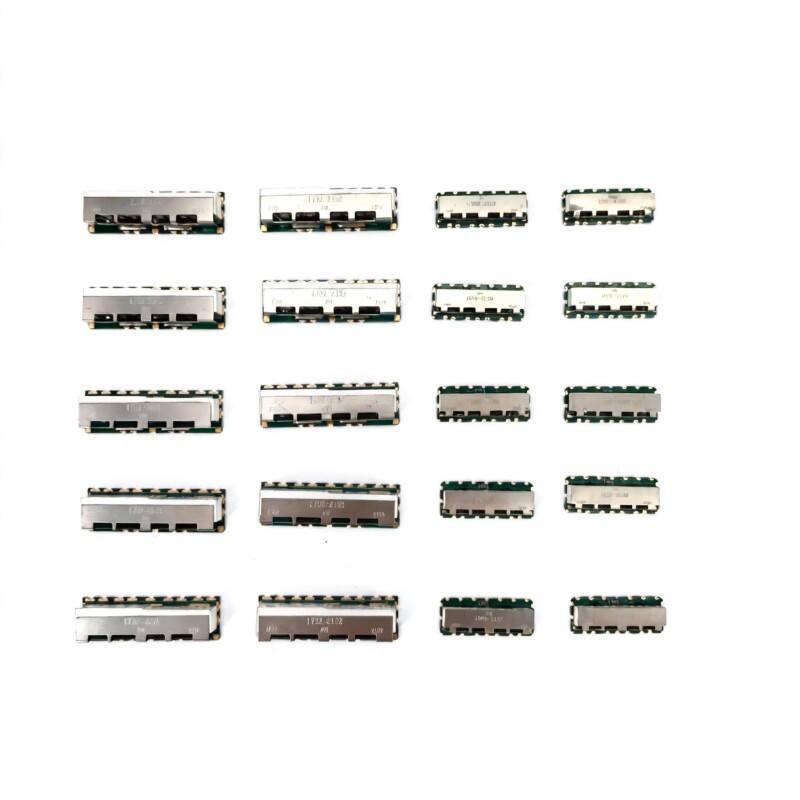
lc high-pass filter components
An LC high-pass filter is a fundamental electronic circuit component that combines an inductor (L) and capacitor (C) to selectively allow frequencies above a certain threshold to pass while attenuating lower frequencies. This filter design operates on the principle of frequency-dependent impedance, where the inductor and capacitor work in tandem to create a frequency-selective network. The inductor presents high impedance to low frequencies while allowing high frequencies to pass, and the capacitor blocks DC signals while conducting AC signals more effectively at higher frequencies. The cutoff frequency, determined by the values of L and C components, marks the point where the output signal power is reduced to half its original value. These filters find extensive applications in audio systems, radio frequency circuits, and signal processing equipment. They are particularly valuable in scenarios requiring the removal of low-frequency noise or DC offset, while preserving high-frequency signals of interest. The passive nature of LC high-pass filters makes them highly reliable and energy-efficient, as they don't require external power sources to operate. Their robust design and predictable behavior have made them essential components in modern electronics, from consumer audio equipment to sophisticated telecommunications systems.



 EN
EN