
 EN
EN
As wireless products become smaller, lighter, and more integrated, antenna design is often one of the hardest engineering compromises. A compact enclosure may need to support GNSS positioning, Bluetooth, IoT connectivity, or even multiple frequency bands, while leaving very little room for the radiating element, ground plane, battery, RF front end, and shielding. In this environment, ceramic antennas have become an important option because they can reduce antenna dimensions without giving up the electrical stability required by modern RF systems.
For companies developing compact wireless terminals, drones, vehicle electronics, tracking devices, smart sensors, or embedded navigation modules, the value of a ceramic antenna is not simply that it is “small.” Its real advantage is the combination of miniaturization, controlled dielectric properties, low loss, repeatable manufacturing, and compatibility with customized RF design.
High Dielectric Constant Helps Reduce Antenna Size
A conventional antenna is strongly related to the wavelength of the operating frequency. When the available PCB area shrinks, engineers quickly run into a physical limitation: the antenna still needs enough effective electrical length to resonate efficiently.
Microwave dielectric ceramics help address this challenge because their high dielectric constant slows electromagnetic wave propagation inside the material. This allows the resonant structure to achieve the required electrical length in a physically smaller volume. RSWave’s microwave dielectric ceramic antennas use high-dielectric-constant, low-loss ceramic materials with metallized surfaces and are designed for microwave-frequency signal transmission and reception. The company lists applications including IoT terminals, high-precision GNSS modules, satellite communication, radar, and 5G-related equipment.
This material property is especially useful in devices where every millimeter matters. A GPS tracker, compact UAV module, handheld industrial terminal, or smart sensor cannot always reserve the large PCB clearance area required by a conventional printed antenna. A ceramic element can give the designer more freedom to balance RF performance with enclosure size.
Miniaturization Can Be Engineered Around Real Frequency Requirements
Small size alone does not guarantee a successful antenna. A useful miniature antenna must still match the target frequency, maintain acceptable VSWR or return loss, deliver the required gain, and interact correctly with the product’s ground plane.
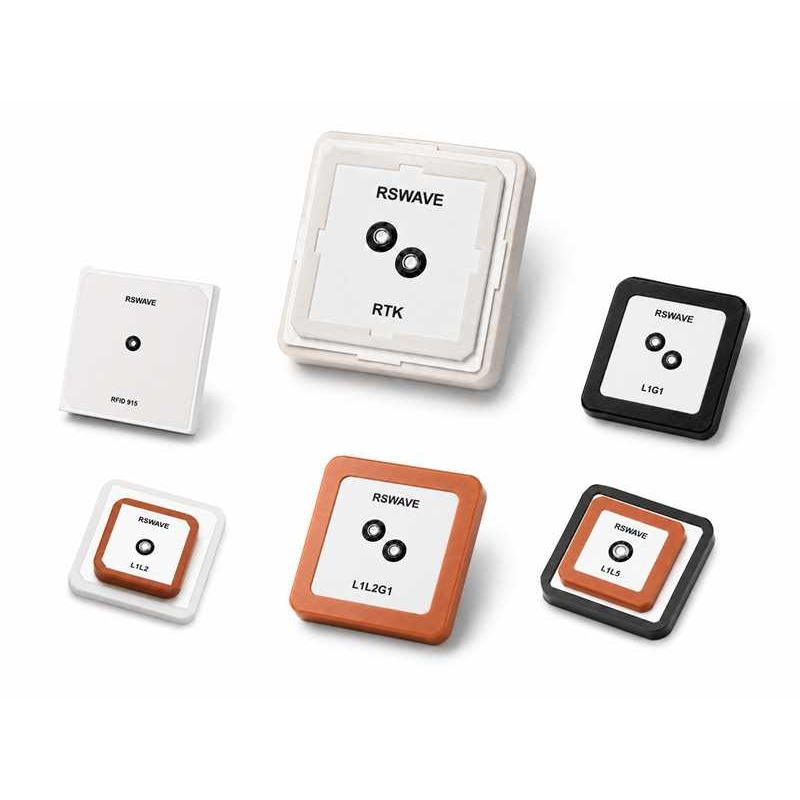
This is where a broad ceramic antenna portfolio becomes valuable. RSWave publishes ceramic antenna options for GNSS frequencies around 1575.42 MHz and 1610 MHz, 902–928 MHz applications, 2338 MHz systems, and 2450 MHz Bluetooth applications. The listed GNSS ceramic antenna sizes range from 8 × 8 × 2 mm up to larger formats, while 2.45 GHz Bluetooth models are available from 12 × 12 × 4 mm upward.
This range illustrates an important design reality: miniaturization should be selected according to the performance target rather than treated as a single fixed specification.
For example, a very small GNSS antenna may be appropriate for a compact tracker, while a larger ceramic patch may be preferred when higher gain or a larger ground plane is acceptable. The correct choice depends on enclosure material, PCB dimensions, cable routing, nearby batteries or displays, operating band, and required radiation efficiency.
Ceramic Materials Offer Useful Frequency and Temperature Stability
Miniature wireless devices are often used outside laboratory conditions. Vehicle electronics may see large temperature swings. Drones experience vibration and changing environmental conditions. Industrial IoT terminals may remain installed for years.
Ceramic materials are attractive in these applications because they can provide stable dielectric behavior and good dimensional consistency. RSWave describes its microwave dielectric ceramic antennas as low-loss and temperature-stable, with strong anti-interference capability and controllable directivity.
These characteristics matter because a small antenna is already operating with limited physical margin. If the resonant frequency shifts significantly because of temperature, material variation, or mechanical stress, RF performance can deteriorate quickly.
Stable material characteristics therefore help engineers maintain more predictable matching and radiation behavior from prototype to production, especially when the antenna is integrated into a tightly packed enclosure.
Dual-Band GNSS Shows How Ceramic Structures Support More Functionality in Less Space
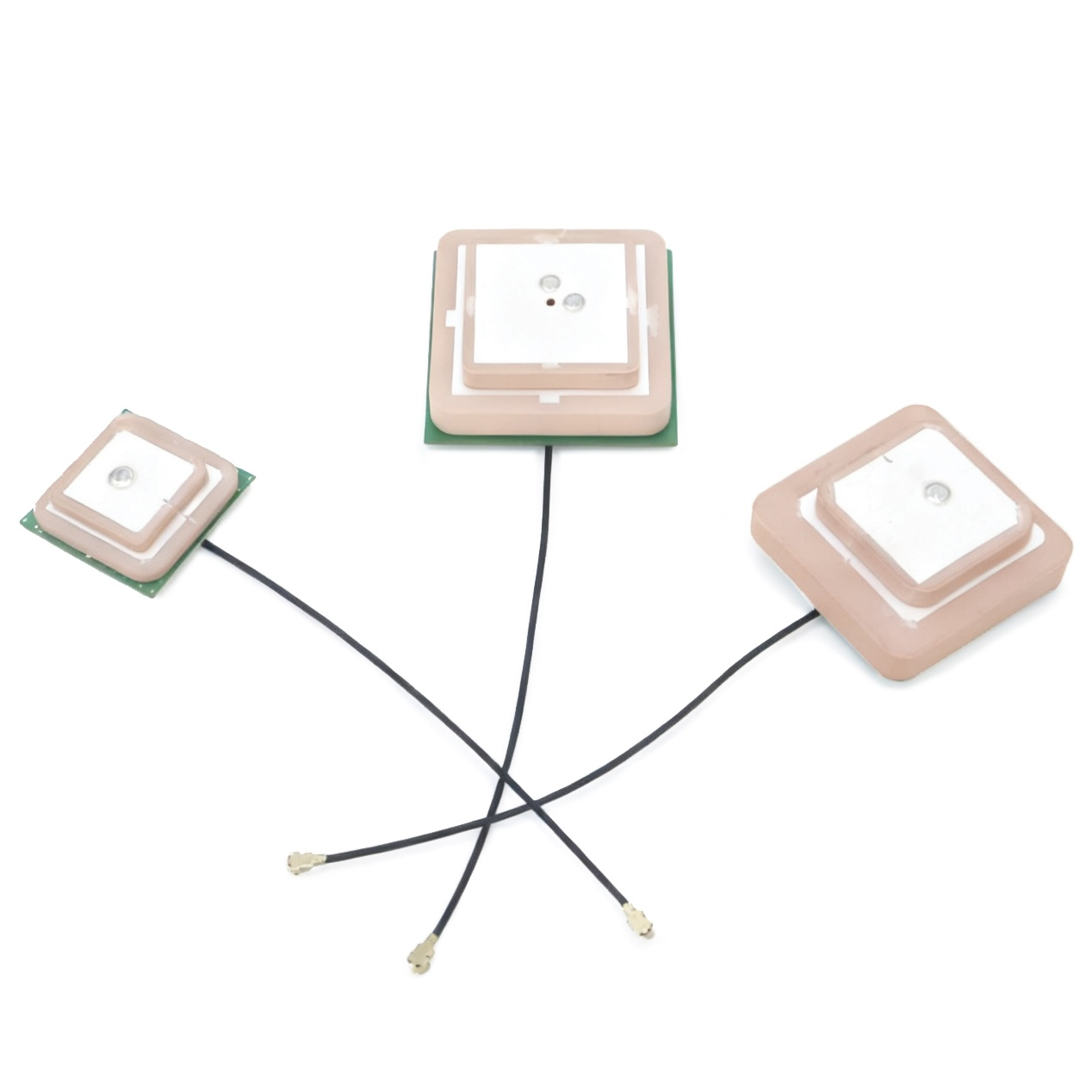
The miniaturization benefit becomes even clearer when one antenna must support more than one band. RSWave’s RAT-102N built-in miniaturized GPS L1/L5 antenna uses a laminated double-layer ceramic structure and is designed for embedded multi-band GNSS reception. The product supports GPS L1/L5 as well as compatible BeiDou and Galileo bands, uses right-hand circular polarization, and integrates a low-noise amplifier for weak-signal reception.
According to RSWave’s published specifications, the RAT-102N provides 50-ohm impedance, return loss below -10 dB, peak zenith gain of 3.0 dBic on the higher-frequency band and 2.5 dBic on the lower-frequency band, while consuming less than 20 mA from a typical 3.3 V supply. RSWave positions the antenna for vehicle tracking, precision agriculture, UAVs, autonomous robots, surveying equipment, telematics, asset tracking, and industrial IoT devices.
This is a practical example of why ceramic technology fits small wireless products: the antenna is not only physically compact; it also combines multi-band reception, amplification, polarization control, and embedded installation in one RF solution.
Low Loss Matters in Battery-Powered Wireless Devices
In small wireless equipment, link budget is precious. Designers may already be working with low transmit power, small batteries, limited antenna volume, and noisy digital electronics. Additional RF loss directly reduces communication margin.
Low-loss microwave ceramic materials help preserve more of the available RF energy. For receiving systems such as GNSS, this supports better handling of weak satellite signals. For short-range or IoT communication systems, lower antenna and matching losses can contribute to more reliable connections without forcing the designer to increase transmit power unnecessarily.
That does not mean a ceramic antenna automatically delivers maximum efficiency in every layout. Integration still matters. Ground plane size, antenna placement, matching components, enclosure plastics, nearby metal, coaxial cable routing, and the RF front-end design all affect final performance. The engineering advantage is that ceramic antennas provide a compact and repeatable platform that can be tuned around these constraints.
Ceramic Antennas Are Well Matched to Dense PCB Integration
Modern wireless products rarely contain a single RF function. A compact device may combine GNSS, Bluetooth, cellular connectivity, sensors, switching regulators, memory, processors, and multiple antennas. Electromagnetic coupling and interference become increasingly difficult as components move closer together.
Ceramic antennas can help because their geometry and dielectric properties allow designers to control the resonant structure within a relatively small footprint. RSWave highlights anti-interference capability, controllable directivity, simulation design, and customizable dimensions or application frequencies across its ceramic antenna range.
For OEM engineers, customization is particularly important. The best antenna is not always a catalogue part that is simply soldered onto the PCB. In many projects, antenna performance must be optimized together with the customer’s board, enclosure, target frequency, installation position, and available ground plane.
RSWave states that its R&D team can provide customized microwave ceramic components, while its ceramic antenna product range allows antenna thickness, external dimensions, and application frequencies to be customized according to project requirements.
Where Ceramic Antennas Make the Most Sense
Ceramic antennas are particularly suitable when the product has strict limits on size but still requires stable RF performance. Typical examples include compact GNSS trackers, UAV navigation modules, smart meters, industrial IoT sensors, embedded Bluetooth devices, vehicle telematics units, autonomous robots, portable surveying instruments, satellite-related terminals, and other space-constrained RF equipment.
These application areas closely match RSWave’s existing RF and antenna portfolio, which serves applications ranging from IoT and unmanned aircraft to automotive navigation, GNSS positioning, satellite links, radar, and other wireless systems.
Ceramic antennas are also attractive when designers need consistent production behavior. In high-volume wireless products, repeatability matters almost as much as peak laboratory performance. A design that works only after manual tuning is difficult to scale. Precision ceramic manufacturing can provide a more controlled RF element, provided the complete antenna system is validated in the final device.
Choosing the Right Ceramic Antenna Is a System-Level Decision
The best way to select a ceramic antenna is to begin with the complete RF requirement rather than only the antenna dimensions. Engineers should define the operating frequency, bandwidth, polarization, target gain, ground-plane area, installation environment, temperature range, connector or feed method, and enclosure constraints. They should then evaluate return loss, VSWR, radiation pattern, total efficiency, sensitivity, and real-world performance in the finished product.
Jiaxing Ruishang Electronic Technology Co., Ltd. has been engaged in the research, development, production, and sales of microwave ceramic components since 2015. Its portfolio includes ceramic antennas, GNSS antennas, microwave ceramic filters, duplexers, LC filters, and cavity filters, with products used across wireless communication, unmanned systems, radar, automotive and marine navigation, surveying, and other RF applications.
For miniaturized wireless communication equipment, ceramic antennas offer a practical engineering path to smaller dimensions without treating RF performance as an afterthought. Their high dielectric constant enables compact resonant structures, low-loss materials help protect signal margin, stable ceramic properties support predictable operation, and customizable designs allow the antenna to be matched to the device rather than forcing the device to be designed around a generic antenna.
As wireless products continue to integrate more functions into less space, that balance between size, stability, RF performance, and design flexibility is exactly why ceramic antennas remain a strong choice for next-generation compact communication and positioning devices.
Table of Contents
- High Dielectric Constant Helps Reduce Antenna Size
- Miniaturization Can Be Engineered Around Real Frequency Requirements
- Ceramic Materials Offer Useful Frequency and Temperature Stability
- Dual-Band GNSS Shows How Ceramic Structures Support More Functionality in Less Space
- Low Loss Matters in Battery-Powered Wireless Devices
- Ceramic Antennas Are Well Matched to Dense PCB Integration
- Where Ceramic Antennas Make the Most Sense
- Choosing the Right Ceramic Antenna Is a System-Level Decision