
 EN
EN
In today's connected world, wireless communication systems are expected to deliver high-speed, low-latency, and highly reliable signal transmission. From 5G base stations and satellite communications to GNSS positioning, radar systems, IoT devices, and industrial wireless networks, every RF signal must pass through multiple front-end components before reaching its destination. Among these components, microwave dielectric ceramic filters play a vital role in ensuring signal integrity while minimizing transmission loss.
One of the most critical performance indicators of an RF filter is insertion loss (IL). A low insertion loss ceramic filter allows more useful RF energy to pass through the signal path while effectively suppressing unwanted frequencies. This directly influences communication distance, receiver sensitivity, power efficiency, and overall network reliability. For modern wireless systems, selecting a high-performance ceramic filter with optimized insertion loss is no longer optional—it is essential.
Understanding Insertion Loss
Insertion loss refers to the reduction in signal power caused by inserting a filter into the RF transmission path. It is measured in decibels (dB), with lower values indicating better transmission efficiency.
For example:
- 0.6 dB insertion loss means almost all of the useful signal passes through.
- 3 dB insertion loss represents approximately 50% power reduction.
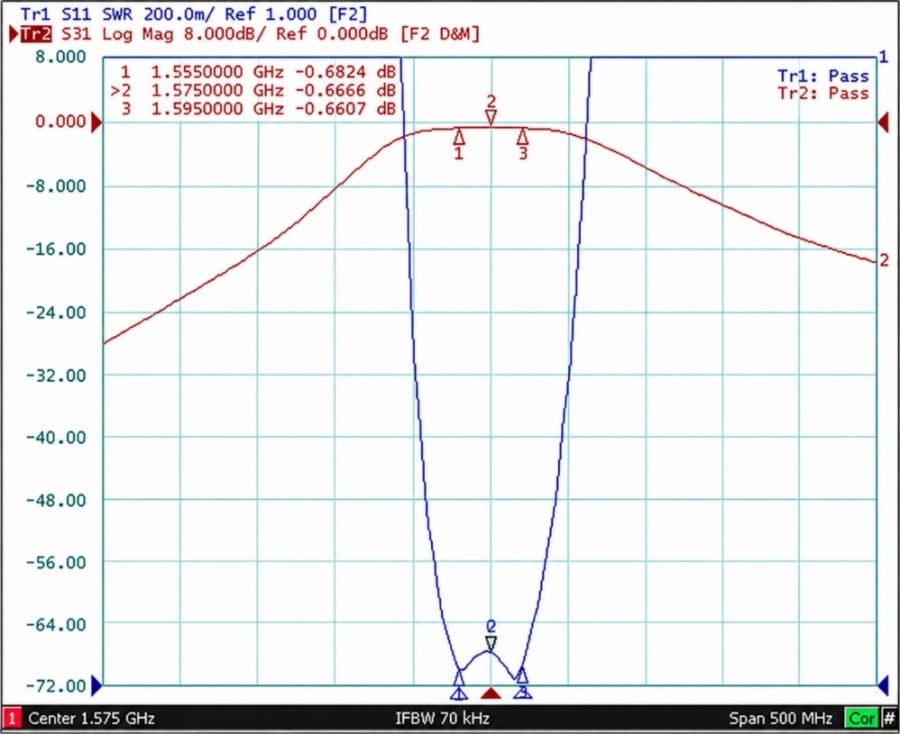
Although a few decibels may appear insignificant, in high-frequency wireless communication systems, even a small increase in insertion loss can noticeably reduce communication quality, particularly over long transmission distances or in weak-signal environments.
High-quality microwave dielectric ceramic filters are designed to maintain excellent insertion loss while simultaneously providing high selectivity and strong out-of-band rejection. This balance is crucial for modern RF front-end architectures.
How Low Insertion Loss Improves Wireless Communication Links
1. Higher Receiver Sensitivity
Every RF receiver depends on receiving sufficient signal energy to correctly decode transmitted information. Excessive insertion loss reduces the signal level before it reaches the low-noise amplifier (LNA), effectively lowering receiver sensitivity.
Low insertion loss ceramic filters preserve incoming signal strength, enabling receivers to detect weaker signals and improving communication stability, especially in long-distance wireless links and satellite communication systems.
2. Greater Communication Coverage
In wireless communication, every decibel matters.
Reducing insertion loss allows more transmitted energy to reach the antenna while minimizing attenuation in the receive path. This translates directly into:
- Extended communication distance
- Improved indoor penetration
- Better rural network coverage
- Reduced dead zones
For cellular infrastructure, this improvement can enhance overall network performance without increasing transmission power.
3. Improved Signal-to-Noise Ratio (SNR)
A strong Signal-to-Noise Ratio is essential for reliable wireless communication.
Low insertion loss ensures that useful signals experience minimal attenuation while the ceramic filter continues suppressing adjacent-channel interference and unwanted harmonics. The result is cleaner RF signals with improved demodulation accuracy, reduced packet errors, and higher data throughput.
This becomes increasingly important for applications such as:
- 5G NR
- Wi-Fi 6/6E
- Industrial IoT
- UAV communications
- Satellite navigation
4. Lower Power Consumption
Power efficiency has become a major design objective for modern wireless equipment.
When insertion loss increases, power amplifiers must compensate by generating additional RF output power. This increases:
- Energy consumption
- Heat generation
- System operating costs
Low insertion loss ceramic filters reduce unnecessary RF power loss, allowing transmitters to operate more efficiently while extending battery life in portable devices and reducing cooling requirements in base stations.
5. Better Overall RF System Performance
Wireless communication systems are composed of multiple RF components, including:
- Power amplifiers
- Low-noise amplifiers
- Duplexers
- Filters
- Antennas
Every component contributes to cumulative system loss. Selecting a low insertion loss ceramic filter helps optimize the entire RF chain by minimizing unnecessary attenuation and preserving overall link budget.
This advantage becomes especially valuable in multi-band communication systems where several filtering stages are required.
Why Microwave Dielectric Ceramic Filters Excel
Compared with conventional LC filters, microwave dielectric ceramic filters offer several unique advantages.
Their high dielectric constant enables significantly smaller component sizes while maintaining excellent resonator performance. Additionally, their low dielectric loss contributes directly to reduced insertion loss across a broad frequency range.
Modern ceramic filters also provide:
- Excellent temperature stability
- High unloaded Q factor
- Superior frequency consistency
- Strong out-of-band suppression
- Compact mechanical structure
- Long operational lifetime
These characteristics make dielectric ceramic filters one of the preferred technologies for demanding RF applications.
Typical Applications Benefiting from Low Insertion Loss
Low insertion loss ceramic filters are widely deployed across numerous wireless industries.
5G Base Stations
Higher transmission efficiency improves cell coverage while lowering infrastructure power consumption.
Satellite Communications
Long-distance RF links require maximum signal preservation to maintain stable communication under extremely weak signal conditions.
Radar Systems
Military and commercial radar rely on precise filtering with minimal signal degradation to improve target detection accuracy.
GNSS Positioning
GPS, GLONASS, Galileo, and BeiDou receivers require high-sensitivity RF front ends where low insertion loss directly enhances positioning accuracy.
Industrial Wireless Networks
Reliable machine-to-machine communication depends on stable RF performance even in environments with strong electromagnetic interference.
RSWave's Microwave Dielectric Ceramic Filter Solutions
As a professional manufacturer of microwave ceramic RF components, Jiaxing Ruishang Electronic Technology Co., Ltd. (RSWave) specializes in designing and manufacturing high-performance microwave dielectric ceramic filters for demanding wireless applications.
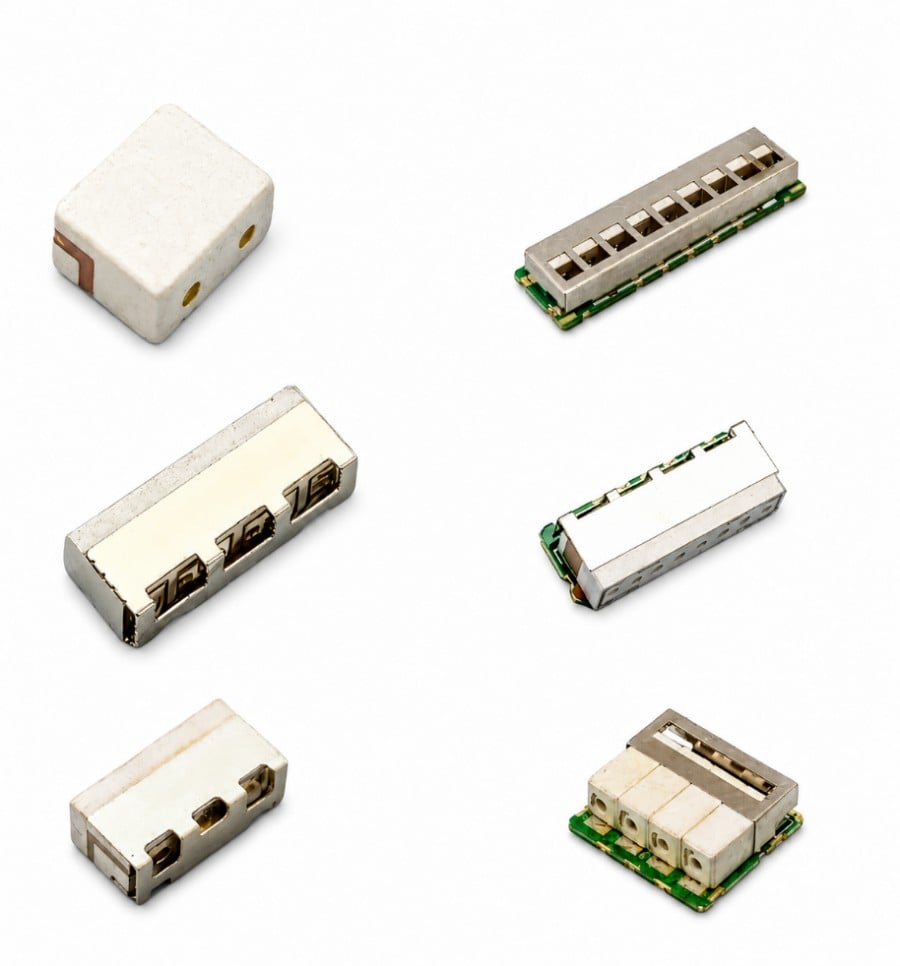
RSWave's ceramic filter portfolio features:
- Frequency coverage from 400 MHz to 7 GHz
- Low insertion loss designs
- Excellent temperature stability
- Compact, lightweight construction
- Customized frequency and bandwidth solutions
- Fast simulation and engineering support
These products are widely used in:
- 5G and 5G-A infrastructure
- Satellite communication equipment
- Radar and T/R modules
- Wi-Fi systems
- Signal repeaters
- GNSS positioning devices
- Industrial RF front-end equipment
The company's experienced RF engineering team provides customized filter solutions tailored to specific frequency bands, bandwidth requirements, and application environments, helping customers optimize overall system performance while reducing development time.
Conclusion
Low insertion loss is far more than a specification on a datasheet—it is a key factor that determines the real-world performance of wireless communication systems. By preserving valuable RF signal energy, improving receiver sensitivity, enhancing Signal-to-Noise Ratio, reducing power consumption, and increasing communication reliability, low insertion loss ceramic filters contribute directly to stronger and more efficient wireless links.
As wireless technologies continue evolving toward higher frequencies, wider bandwidths, and more demanding performance requirements, microwave dielectric ceramic filters will remain indispensable components in RF front-end design. Choosing a trusted manufacturer with advanced material technology, precise simulation capabilities, and proven manufacturing expertise—such as RSWave—can help engineers build next-generation communication systems with greater efficiency, stability, and long-term reliability.