
 EN
EN
The modern wireless world is being built in two directions at once. On the ground, 5G networks are increasing capacity through wider channel bandwidths, denser base-station deployment, massive MIMO, and higher-frequency spectrum. Above the Earth, low-Earth-orbit (LEO) satellite constellations such as Starlink are extending broadband connectivity across long distances and hard-to-reach locations.
The architectures are different, but both depend on the same fundamental RF engineering principle: transmit the wanted signal efficiently while rejecting everything that can degrade it.
That is why RF filters remain fundamental to both satellite and terrestrial wireless systems. They do not create bandwidth, but they determine how effectively a radio can use the bandwidth available to it. A properly designed filter limits out-of-band energy, suppresses harmonics and spurious responses, protects sensitive receiver stages from strong nearby signals, and helps different transmit and receive paths coexist inside an increasingly compact RF front end.
Why Starlink and 5G Both Need Better Frequency Selectivity
Starlink is a useful example of how satellite broadband is moving toward greater capacity and more complex spectrum use. In January 2026, the U.S. Federal Communications Commission authorized SpaceX to operate additional second-generation Starlink satellites and stated that the system could operate across Ku-, Ka-, V-, E-, and W-band frequencies.
This does not mean that one filter technology covers every Starlink frequency band. Instead, it illustrates the breadth of frequency-management challenges found in next-generation satellite networks. For clarity, the discussion here concerns RF engineering applicability and does not claim that RSWave supplies components directly to SpaceX or Starlink.
A satellite communication link can contain multiple filtering stages. Filters may be positioned ahead of low-noise amplifiers to reduce unwanted RF energy, after power-amplifier stages to control harmonics and out-of-band emissions, and within frequency-conversion chains to isolate desired intermediate or microwave bands.
In gateway equipment and satellite user-terminal RF hardware, low insertion loss is particularly important because every fraction of a decibel consumes valuable link budget. Strong out-of-band rejection is equally important because powerful unwanted signals can desensitize a receiver even when those signals are outside the intended channel.
5G faces a related problem in a very different operating environment. 3GPP specifications include NR operation reaching 7.125 GHz as well as FR2 bands such as n258 at 24.25–27.5 GHz and n257 at 26.5–29.5 GHz. Base stations, repeaters, radio units, and distributed wireless equipment therefore need to operate in increasingly crowded spectrum while maintaining emissions, receiver-performance, and coexistence requirements.
The result is continuous demand for RF components that combine low loss, appropriate power handling, steep rejection, stable frequency response, and compact dimensions.
Different Filter Technologies for Different Parts of the RF Chain
No single filter structure is optimal for every frequency, bandwidth, power level, rejection requirement, and mechanical envelope. The practical advantage of a broad RF component portfolio is the ability to select the structure that best fits the actual system.
Jiaxing Ruishang Electronic Technology Co., Ltd. (RSWave) has been engaged in the R&D, production, and sales of microwave ceramic components since 2015. Its portfolio includes microwave dielectric ceramic filters, ceramic duplexers, RF LC filters, cavity filters, ceramic antennas, and GNSS antennas. The company states that its broader product portfolio covers frequencies from DC to 30 GHz, with customization available for application-specific requirements.
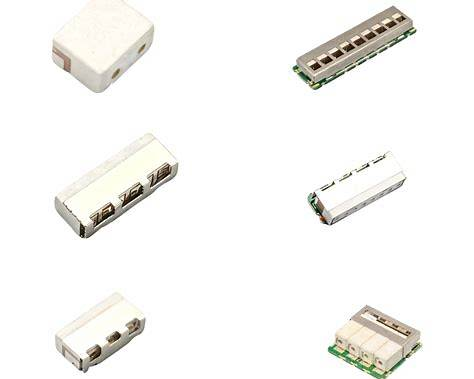
For compact 5G and wireless front ends, microwave dielectric ceramic filters are particularly relevant. RSWave specifies a frequency range of 400 MHz to 7 GHz for this product family. High-dielectric-constant ceramic materials enable physically smaller resonators, while low-loss and temperature-stable materials can help maintain predictable RF characteristics. RSWave lists 5G/5G-A base stations, satellite communications, radar, T/R modules, Wi-Fi equipment, and repeaters among the applications for these filters.
This combination is attractive for RF equipment in which PCB area is limited but frequency selectivity cannot be compromised.
RSWave also offers microwave dielectric ceramic duplexers covering 400 MHz to 6 GHz. A duplexer combines frequency-selective transmit and receive paths so that different signal paths can share an antenna while maintaining the necessary isolation. For network hardware subject to strict size constraints, integrating filtering and signal-routing functions can simplify the overall RF front-end architecture.
From 5G FR1 to Microwave Satellite Links
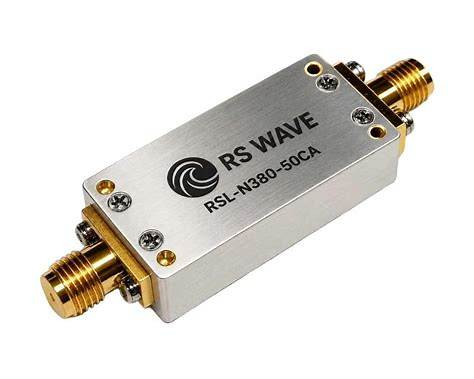
For broader frequency coverage, higher power levels, or more demanding stop-band requirements, LC filters and cavity filters provide another engineering path.
RSWave’s RF LC filter and cavity filter product family is specified across DC to 30 GHz and can be engineered as low-pass, high-pass, band-pass, or band-stop configurations. Published examples on the company’s product page include center frequencies around 2.6 GHz, 3.5 GHz, 3.8 GHz, and 4.5 GHz, while other frequencies can be customized according to system requirements.
These frequency ranges are particularly relevant to modern wireless infrastructure. At the same time, a portfolio extending into microwave frequencies creates opportunities for selected satellite communication, microwave-link, radar, and high-frequency RF applications.
Cavity filters are especially useful where low insertion loss, high Q, strong out-of-band rejection, and RF power capability take priority over minimum physical size. Carefully designed resonant cavities can provide the selectivity required in base stations, satellite ground equipment, microwave communication links, and other performance-sensitive RF systems. RSWave specifically identifies mobile communication base stations and satellite communication among the applications for its cavity-filter technology.
Where the Requirements of LEO Satellite and 5G Systems Converge
Although a Starlink gateway and a 5G radio unit do not use identical RF chains, engineers working on both types of system encounter several common design priorities.
The first is interference control. A receiver must accept the intended channel without being overloaded by nearby transmitters, harmonics, or internally generated spurious signals. Sufficient filter rejection reduces the burden placed on mixers, amplifiers, and analog-to-digital converters farther downstream.
The second is insertion loss. In a receiver, excessive loss before the low-noise amplifier can degrade system noise performance. In a transmitter, unnecessary loss converts valuable RF power into heat. For both satellite and 5G infrastructure, reducing avoidable loss helps preserve link margin and system efficiency.
The third priority is thermal and environmental stability. Outdoor radio equipment can experience substantial temperature variation, while satellite ground terminals may operate continuously in exposed environments. Excessive frequency drift can shift a filter response away from the intended operating channel. Microwave dielectric ceramic technologies therefore become attractive when engineers need to balance compact dimensions with stable electrical performance.
The fourth priority is integration. Network equipment continues to become smaller and more functionally dense. Ceramic filters and duplexers can support compact assemblies, while cavity designs remain important when electrical performance is more critical than package size.
A successful RF design is therefore not about finding the theoretical “best filter.” It is about matching topology, material, package, interface, bandwidth, rejection, loss, and tolerance to the complete RF signal chain.
How RSWave Fits Into RF Front-End Development
For RF engineers and component buyers, catalog specifications are only the starting point.
Real projects often require a particular center frequency, bandwidth, insertion-loss target, rejection profile, VSWR, connector configuration, footprint, power level, or environmental requirement. RSWave states that its LC filters, cavity filters, microwave dielectric ceramic filters, and duplexers can be customized, supported by simulation and product-design capabilities.
This matters because the most useful RF filter is not simply the component with the highest headline rejection figure.
A successful design must consider the complete system: desired signal bandwidth, adjacent interferers, transmitter output power, receiver sensitivity, impedance matching, PCB or mechanical constraints, operating temperature, and manufacturing repeatability. Early technical communication between the RF-system designer and filter manufacturer can therefore reduce redesign risk later in a project.
For 5G equipment operating below 7 GHz, RSWave’s microwave dielectric ceramic filter range overlaps many important cellular and private-network frequency regions. Its broader LC and cavity filter portfolio extends to 30 GHz, reaching into the lower portion of 5G FR2 as well as microwave spectrum associated with satellite communication and other high-frequency systems.
That spectrum coverage makes the portfolio relevant to engineers developing terrestrial wireless infrastructure, microwave communication links, and selected satellite-ground RF subsystems.
Filtering Is a Quiet Enabler of Connected Infrastructure
Users experience Starlink and 5G through speed, coverage, and latency. RF engineers see a much more complicated picture: every useful wireless connection results from antennas, amplifiers, oscillators, mixers, converters, duplexers, and passive components working together inside a tightly controlled spectral environment.
RF filters are among the least visible components in that chain, but their role is fundamental.
As 5G networks add capacity and LEO satellite systems expand their use of spectrum, the need for precise frequency selection, low insertion loss, high isolation, interference suppression, and stable performance becomes more demanding—not less.
With microwave dielectric ceramic filters, ceramic duplexers, LC filters, and cavity filters spanning applications from sub-GHz frequencies into the microwave domain, RSWave provides multiple technical paths for RF-front-end designers. The essential principle is application-specific engineering: select the appropriate filter architecture and then optimize it around the actual operating band, interference environment, power requirement, package size, and system interface.
From terrestrial 5G radio units to LEO satellite ground links, reliable connectivity begins long before the signal reaches the antenna.
It begins with controlling the spectrum—and that is exactly where well-engineered RF filtering technology delivers its value.
Table of Contents
- Why Starlink and 5G Both Need Better Frequency Selectivity
- Different Filter Technologies for Different Parts of the RF Chain
- From 5G FR1 to Microwave Satellite Links
- Where the Requirements of LEO Satellite and 5G Systems Converge
- How RSWave Fits Into RF Front-End Development
- Filtering Is a Quiet Enabler of Connected Infrastructure