
 EN
EN
Introduction to LC Band-Pass Filters
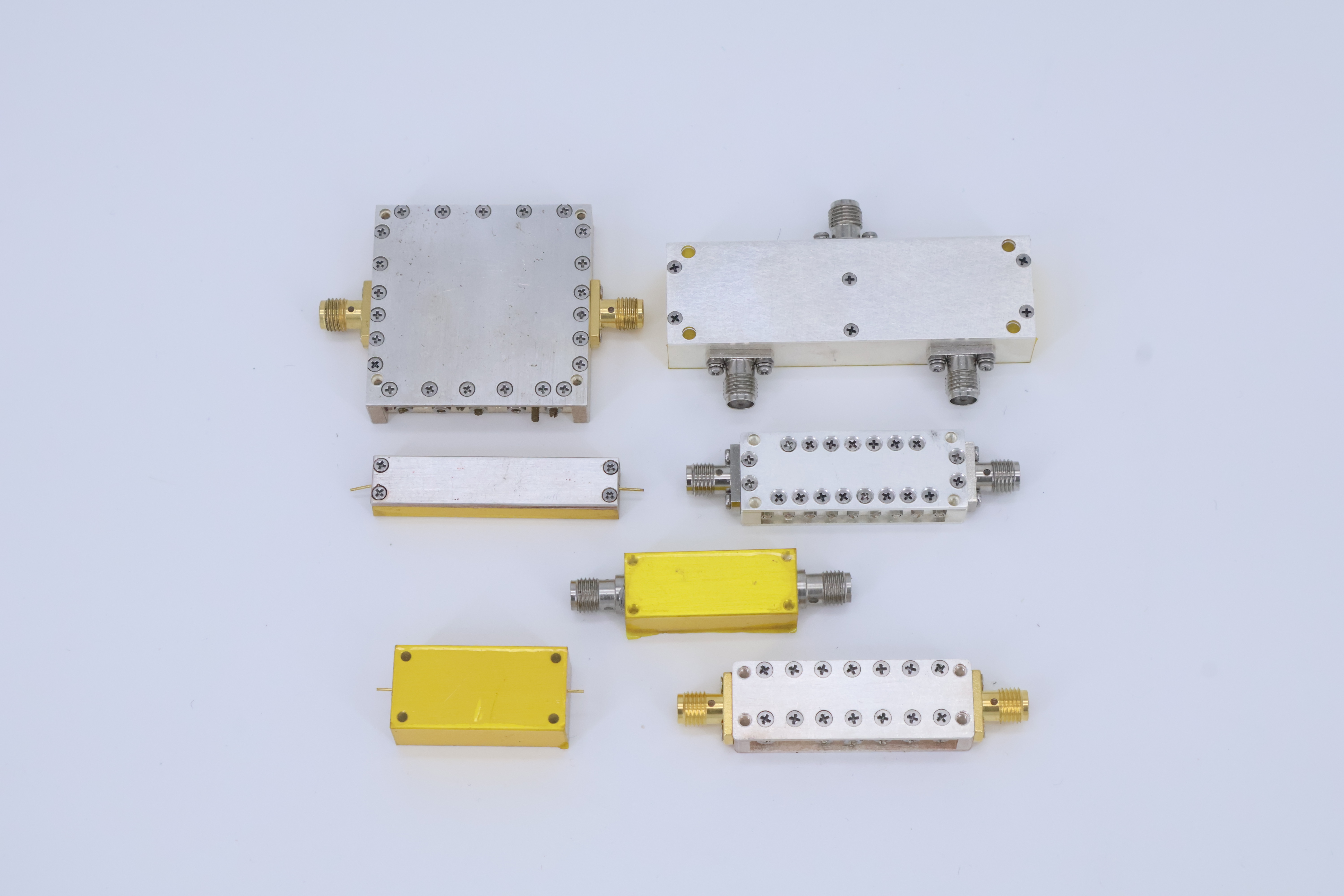
The demand for precise frequency control in modern electronic systems has made the lc band-pass filter an indispensable component across countless applications. From telecommunications infrastructure to consumer electronics, these sophisticated filtering devices enable selective frequency transmission while effectively blocking unwanted signals. Understanding the fundamental principles and practical applications of lc band-pass filter technology is essential for engineers designing RF systems that require optimal performance and reliability. The versatility of these filters extends far beyond basic signal conditioning, encompassing critical roles in everything from wireless communication networks to precision measurement instrumentation.
Fundamental Design Principles of LC Band-Pass Filters
Circuit Topology and Component Interactions
The basic architecture of an lc band-pass filter relies on the resonant properties of inductors and capacitors working in complementary configurations. When properly designed, these components create a resonant frequency where the inductive and capacitive reactances cancel each other, resulting in minimal impedance and maximum signal transmission. The quality factor, or Q, of the lc band-pass filter determines the selectivity and bandwidth characteristics, with higher Q values producing narrower passbands and steeper roll-off rates. Engineers must carefully balance component tolerances, temperature coefficients, and parasitic effects to achieve desired performance specifications.
Advanced lc band-pass filter designs often incorporate multiple resonant stages to achieve enhanced selectivity and improved out-of-band rejection. The coupling between stages significantly influences the overall frequency response, with options ranging from loose coupling for broader bandwidths to tight coupling for sharper transition characteristics. Modern simulation tools enable precise prediction of filter behavior, allowing engineers to optimize component values before physical implementation and reducing development time considerably.
Frequency Response Characteristics
The frequency response of an lc band-pass filter exhibits distinctive characteristics that make it suitable for specific applications requiring precise frequency discrimination. The center frequency is determined primarily by the resonant frequency of the LC tank circuit, while the bandwidth is influenced by the loaded Q factor and source impedance matching. Understanding these relationships enables engineers to tailor filter responses to meet stringent application requirements, whether for narrow-band communications or broader spectrum applications.
Temperature stability represents a critical consideration in lc band-pass filter design, as component variations can cause significant frequency drift in precision applications. Modern designs incorporate temperature-compensating techniques and low-temperature-coefficient components to maintain stable operation across wide operating ranges. The insertion loss characteristics also play a crucial role in system performance, with well-designed filters minimizing signal attenuation within the passband while maximizing rejection outside the desired frequency range.
Telecommunications and Wireless Communication Systems
Cellular Network Infrastructure
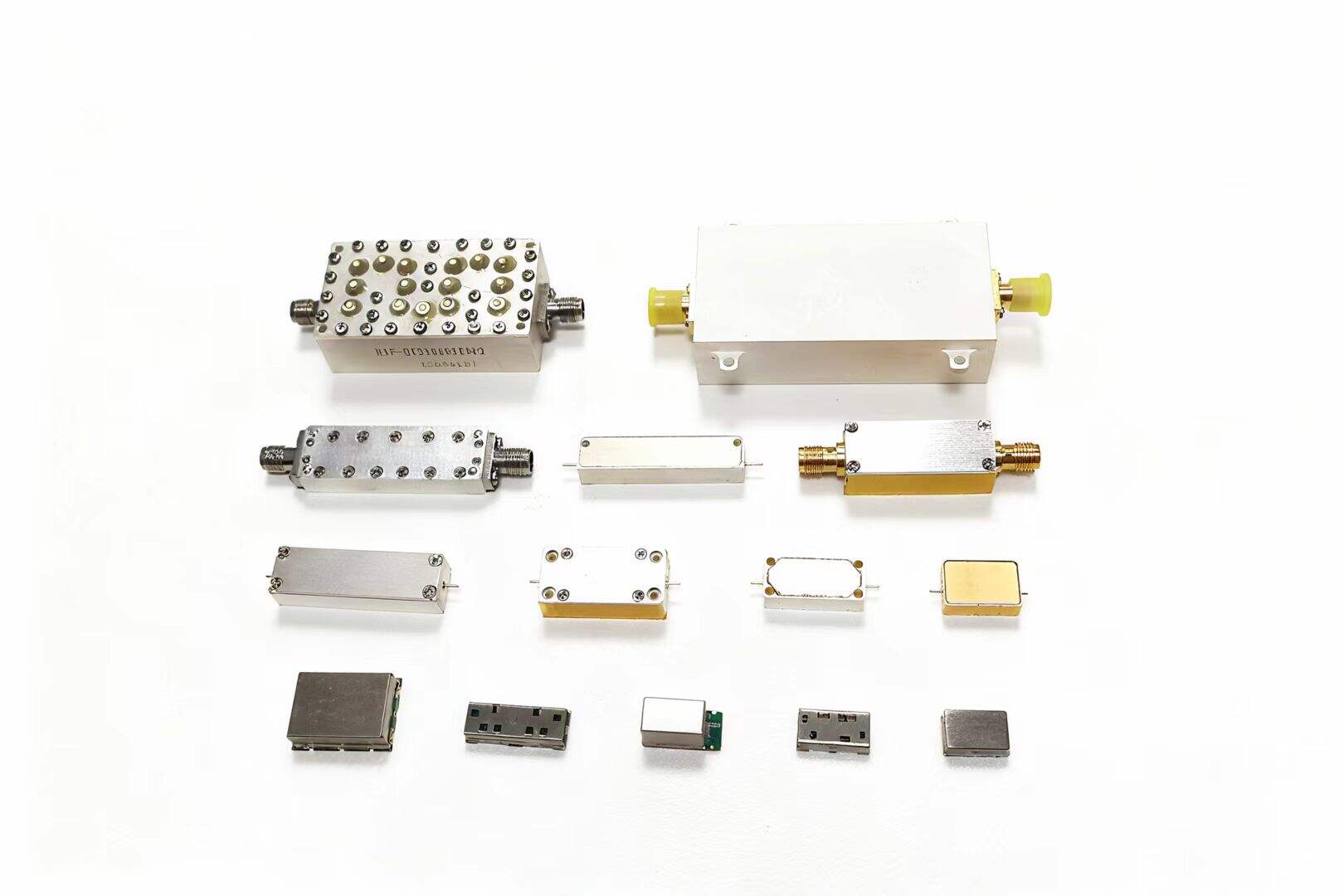
In cellular network infrastructure, lc band-pass filter implementations serve critical functions in base station equipment, ensuring clean signal transmission and reception across multiple frequency bands. These filters enable simultaneous operation of different cellular standards while preventing interference between adjacent channels and services. The demanding requirements of modern 5G networks have driven innovations in lc band-pass filter technology, with enhanced linearity and power handling capabilities becoming increasingly important for maintaining signal quality in high-density deployment scenarios.
The evolution toward software-defined radio architectures has created new challenges and opportunities for lc band-pass filter applications in telecommunications. Reconfigurable filtering systems that can adapt to different frequency bands and modulation schemes require sophisticated control mechanisms and precisely designed filter banks. These advanced implementations enable dynamic spectrum management and improved spectral efficiency, contributing to the overall capacity and performance of modern wireless networks.
Satellite Communication Systems
Satellite communication systems rely heavily on precision lc band-pass filter technology to maintain signal integrity across the challenging space environment. These filters must operate reliably under extreme temperature variations, radiation exposure, and mechanical stress while maintaining tight frequency specifications. The low-loss characteristics of properly designed lc band-pass filter circuits are particularly important in satellite applications, where power efficiency directly impacts mission duration and operational costs.
Ground station equipment also benefits significantly from advanced lc band-pass filter implementations, particularly in applications requiring simultaneous reception of multiple satellite signals or operation across various frequency bands. The high Q factors achievable with precision LC components enable excellent adjacent channel rejection, essential for maintaining communication quality in increasingly crowded satellite spectrum allocations.
Consumer Electronics and Broadcasting Applications
Radio and Television Receivers
Modern radio and television receivers incorporate sophisticated lc band-pass filter circuits to selectively tune desired broadcast signals while rejecting unwanted interference and adjacent channel content. The ability to provide sharp frequency discrimination enables clear reception even in challenging RF environments with multiple strong signals present. Digital broadcasting standards have introduced additional requirements for linear phase response and group delay characteristics, driving continued innovation in lc band-pass filter design techniques.
The integration of multiple tuning bands within single receiver architectures requires sophisticated switching and control mechanisms for lc band-pass filter circuits. Modern implementations often include electronically tunable components that can adapt filter characteristics in real-time, enabling seamless band switching and optimal performance across wide frequency ranges. These advanced features contribute significantly to user experience and reception quality in contemporary consumer electronics devices.
Audio and Video Equipment
Professional audio and video production equipment relies on precision lc band-pass filter technology for signal conditioning and interference rejection in critical applications. These filters enable clean separation of desired signals from noise and unwanted harmonics, contributing directly to the overall quality of recorded and transmitted content. The low distortion characteristics achievable with properly designed LC circuits make them particularly suitable for high-fidelity audio applications where signal purity is paramount.
Broadcasting transmission equipment also incorporates specialized lc band-pass filter designs to ensure compliance with regulatory emission standards while maximizing transmitted signal quality. These filters must handle significant power levels while maintaining precise frequency characteristics and low spurious emissions. The reliability requirements for broadcast applications demand robust construction techniques and careful attention to component specifications and thermal management considerations.
Industrial and Scientific Instrumentation
Test and Measurement Equipment
Precision test and measurement instrumentation depends heavily on advanced lc band-pass filter technology to achieve accurate signal analysis and characterization capabilities. Spectrum analyzers, network analyzers, and signal generators all incorporate sophisticated filtering circuits to ensure measurement accuracy and dynamic range performance. The exceptional selectivity available from high-Q lc band-pass filter designs enables precise isolation of signals of interest from complex RF environments, essential for accurate measurement results.
Calibration and reference standards in RF metrology applications require extremely stable lc band-pass filter circuits with predictable and repeatable characteristics. These applications often demand custom filter designs with specialized components and construction techniques to achieve the required long-term stability and measurement traceability. The development of automated test equipment has also created opportunities for programmable lc band-pass filter implementations that can adapt to different measurement requirements automatically.
Research and Development Applications
Scientific research applications often require specialized lc band-pass filter implementations with unique characteristics not available in standard commercial products. Radio astronomy, particle physics experiments, and materials research all utilize custom filter designs optimized for specific frequency ranges and environmental conditions. The ability to achieve extremely low noise figures and high dynamic range performance makes lc band-pass filter technology essential for sensitive scientific measurements and observations.
Emerging research areas such as quantum communications and terahertz technology are driving innovation in lc band-pass filter design toward higher frequencies and more exotic materials. These advanced applications require fundamental understanding of electromagnetic behavior at the component level and sophisticated modeling techniques to predict and optimize filter performance. The intersection of traditional LC circuit principles with cutting-edge materials science continues to expand the boundaries of what is possible with band-pass filtering technology.
Aerospace and Defense Systems
Military Communication Equipment
Military communication systems place exceptional demands on lc band-pass filter technology, requiring robust performance under extreme environmental conditions while maintaining strict electromagnetic compatibility requirements. These applications often involve operation across multiple frequency bands with rapid switching capabilities and high power handling requirements. The reliability and survivability characteristics of military-grade lc band-pass filter designs must accommodate harsh temperature extremes, shock and vibration, and potential electromagnetic pulse exposure.
Secure communication systems also benefit from advanced lc band-pass filter implementations that can help prevent signal interception and jamming attempts. Frequency-hopping spread spectrum systems require rapid tuning capabilities and excellent spurious signal rejection to maintain communication security and reliability. The integration of adaptive filtering techniques with traditional LC circuit principles enables sophisticated anti-jamming capabilities essential for modern military communication systems.
Radar and Electronic Warfare Systems
Radar systems incorporate specialized lc band-pass filter designs optimized for high power transmission and sensitive reception capabilities across various frequency bands. These filters must provide excellent isolation between transmit and receive paths while maintaining low insertion loss and high linearity characteristics. The demanding requirements of modern phased array radar systems have driven innovations in lc band-pass filter technology toward higher frequency operation and improved power handling capabilities.
Electronic warfare applications require sophisticated lc band-pass filter implementations that can rapidly adapt to changing threat environments and frequency assignments. These systems often incorporate multiple filter banks with electronic switching capabilities to provide comprehensive spectrum coverage and optimal performance against various signal types. The development of cognitive radio techniques has created new opportunities for intelligent lc band-pass filter systems that can automatically optimize their characteristics based on the operational environment.
Emerging Applications and Future Trends
Internet of Things and Smart Devices
The proliferation of Internet of Things devices has created massive demand for compact, low-power lc band-pass filter solutions that can operate effectively in dense RF environments. These applications often require operation across multiple frequency bands with stringent size and power consumption constraints. The development of integrated circuit implementations of lc band-pass filter functions enables cost-effective solutions for high-volume consumer applications while maintaining adequate performance for most IoT requirements.
Smart home and industrial automation systems increasingly rely on reliable wireless communication links that depend on effective lc band-pass filter implementations to maintain connectivity in challenging RF environments. The coexistence requirements for multiple wireless protocols operating simultaneously within the same physical space demand sophisticated filtering strategies and careful system design. Advanced lc band-pass filter techniques enable robust operation even with significant interference from other electronic devices and systems.
Automotive and Transportation Systems
Modern automotive electronics incorporate numerous lc band-pass filter circuits to support advanced driver assistance systems, infotainment platforms, and vehicle-to-everything communication capabilities. The harsh automotive environment presents unique challenges for filter design, including wide temperature ranges, electrical noise from vehicle systems, and stringent electromagnetic compatibility requirements. Automotive-qualified lc band-pass filter implementations must demonstrate exceptional reliability over extended operational lifetimes while maintaining consistent performance characteristics.
The development of autonomous vehicle technology has created new applications for precision lc band-pass filter systems in radar, lidar, and communication subsystems critical for safe operation. These safety-critical applications demand the highest levels of reliability and performance consistency, driving continued innovation in lc band-pass filter design and manufacturing techniques. The integration of multiple sensor modalities within single vehicle platforms requires sophisticated interference mitigation strategies that often rely on advanced filtering implementations.
FAQ
What factors determine the center frequency of an lc band-pass filter
The center frequency of an lc band-pass filter is primarily determined by the resonant frequency of the LC tank circuit, calculated using the formula f = 1/(2π√LC), where L represents inductance and C represents capacitance. However, practical implementations must also consider parasitic effects, component tolerances, and loading effects from source and load impedances. Temperature coefficients of the inductor and capacitor materials also influence frequency stability over operating temperature ranges, requiring careful component selection for precision applications.
How does the Q factor affect lc band-pass filter performance
The quality factor, or Q, of an lc band-pass filter directly determines the selectivity and bandwidth characteristics of the frequency response. Higher Q values result in narrower passbands with steeper roll-off rates outside the passband, providing better adjacent channel rejection but potentially reduced bandwidth for signal transmission. The Q factor is influenced by component losses, primarily the resistance of the inductor and the equivalent series resistance of the capacitor, as well as loading effects from the circuit environment.
What are the main advantages of lc band-pass filters compared to other filter types
LC band-pass filters offer several distinct advantages including excellent power handling capabilities, low insertion loss when properly designed, and the ability to achieve very high Q factors for exceptional selectivity. They provide stable operation over wide temperature ranges when using appropriate components and can be designed for operation from low frequencies up to several gigahertz. Additionally, lc band-pass filter circuits can be easily tuned by varying component values and offer excellent linearity characteristics essential for high-dynamic-range applications.
How do parasitic effects influence lc band-pass filter design
Parasitic effects in lc band-pass filter circuits include self-resonances in inductors, equivalent series resistance and inductance in capacitors, and distributed capacitances and inductances in circuit layout. These effects become increasingly significant at higher frequencies and can cause deviations from ideal filter response, including spurious resonances and reduced Q factors. Modern filter design practices incorporate electromagnetic simulation tools to predict and minimize parasitic effects, while careful component selection and circuit layout techniques help maintain desired performance characteristics throughout the operating frequency range.
Table of Contents
- Introduction to LC Band-Pass Filters
- Fundamental Design Principles of LC Band-Pass Filters
- Telecommunications and Wireless Communication Systems
- Consumer Electronics and Broadcasting Applications
- Industrial and Scientific Instrumentation
- Aerospace and Defense Systems
- Emerging Applications and Future Trends
- FAQ