
 EN
EN
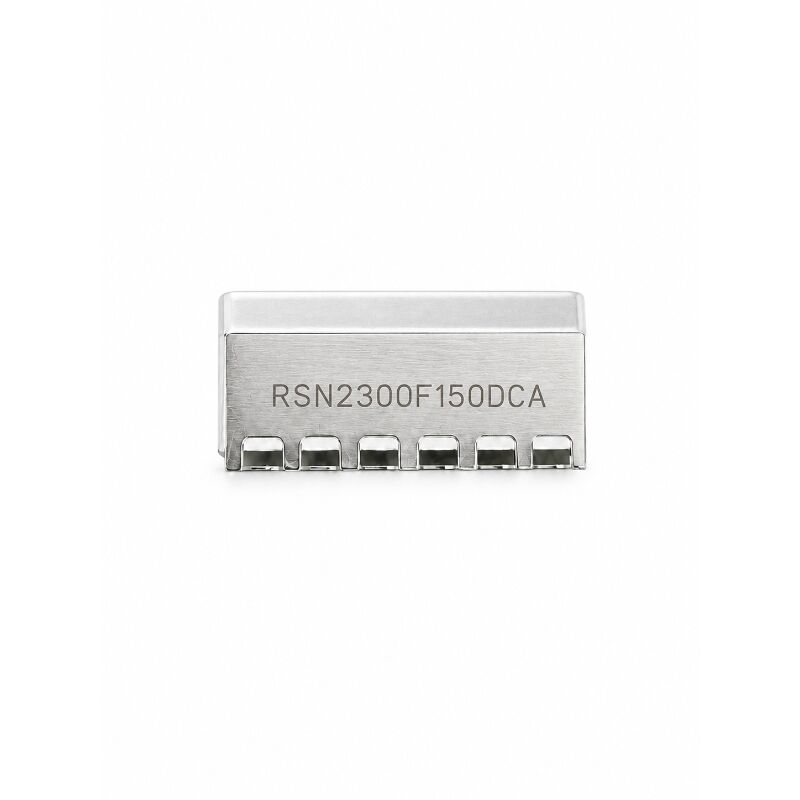
As 5G networks continue to expand, the demand for higher data rates, lower latency, and more stable signal transmission is increasing rapidly. Behind these high-performance communication systems, 5G waveguide filters play a critical role. They help select the desired frequency band, reject unwanted signals, and ensure reliable performance in millimeter-wave applications.
For engineers, telecom equipment manufacturers, and RF system designers, understanding how 5G waveguide filters achieve precise frequency selection is essential for building efficient and interference-resistant communication networks.
What Is a 5G Waveguide Filter?
A waveguide filter is a passive RF and microwave component designed to allow specific frequencies to pass while blocking others. Unlike coaxial or PCB-based filters, waveguide filters use hollow metallic structures to guide electromagnetic waves with very low loss.
In 5G systems, especially in millimeter-wave frequency bands such as 26 GHz, 28 GHz, 39 GHz, and above, waveguide filters are widely used because they offer excellent power handling, high Q factor, low insertion loss, and strong out-of-band rejection.
These features make them ideal for base stations, radar systems, satellite communication, test equipment, and other high-frequency applications.
Why Precise Frequency Selection Matters in 5G
5G networks operate in crowded and complex spectrum environments. Multiple signals may exist close to each other, and even small amounts of interference can reduce system performance. Precise frequency selection helps ensure that only the required signal band passes through the system.
A high-quality 5G waveguide filter can:
Reduce adjacent channel interference
Improve signal clarity
Protect sensitive RF components
Enhance transmission efficiency
Support stable high-speed data communication
In millimeter-wave 5G systems, signal loss and interference are major challenges. This is why waveguide filters are often preferred in critical RF front-end designs.
How 5G Waveguide Filters Select Frequencies
The frequency selection ability of a waveguide filter mainly comes from its physical structure and electromagnetic resonance characteristics. Inside the waveguide, cavities, irises, posts, screws, or other tuning structures are designed to resonate at specific frequencies.
When an electromagnetic wave enters the filter, frequencies within the designed passband can propagate efficiently. Frequencies outside the passband are reflected, attenuated, or rejected.
The filter performance is determined by several key parameters:
Center Frequency
This is the target frequency around which the filter is designed to operate. For example, a 28 GHz waveguide filter is optimized to pass signals near 28 GHz.
Bandwidth
Bandwidth defines the range of frequencies that can pass through the filter. A narrow bandwidth provides sharper frequency selection, while a wider bandwidth supports broader signal transmission.
Insertion Loss
Insertion loss measures how much signal power is lost as the desired signal passes through the filter. Lower insertion loss means better efficiency.
Return Loss
Return loss indicates how well the filter is matched to the system. Better matching reduces signal reflection and improves transmission stability.
Out-of-Band Rejection
This shows how effectively the filter blocks unwanted frequencies outside the passband. Strong rejection is essential for reducing interference in 5G networks.
Design Factors That Improve Filtering Accuracy
To achieve precise frequency selection, 5G waveguide filters require advanced engineering and high-precision manufacturing. Even small dimensional errors can shift the operating frequency, especially at millimeter-wave frequencies.
Key design and manufacturing factors include:
Accurate Cavity Design
The size and shape of each resonant cavity directly affect the filter’s frequency response. Engineers use electromagnetic simulation software to optimize the internal structure before production.
High-Precision Machining
At 5G millimeter-wave frequencies, tolerances are extremely tight. CNC machining, precision milling, and advanced surface finishing help ensure stable filter performance.
Careful Material Selection
Aluminum, copper, brass, and silver-plated materials are commonly used to reduce loss and improve conductivity. The right material helps maintain low insertion loss and long-term reliability.
Tuning and Testing
Many waveguide filters include tuning screws or adjustable elements. After manufacturing, each filter is tested with network analyzers and carefully tuned to meet the required specifications.
Applications of 5G Waveguide Filters
5G waveguide filters are used in many high-frequency communication and RF systems, including:
5G base station equipment
Millimeter-wave transceivers
RF front-end modules
Satellite communication systems
Microwave test and measurement equipment
Radar and aerospace systems
Their ability to handle high frequencies and maintain excellent signal integrity makes them a reliable choice for demanding applications.
Choosing the Right 5G Waveguide Filter
When selecting a waveguide filter for a 5G system, it is important to consider center frequency, bandwidth, insertion loss, rejection level, power handling, connector type, and environmental requirements.
A custom waveguide filter may be the best solution when standard products cannot meet specific system requirements. Custom designs can be optimized for unique frequency bands, mechanical dimensions, and performance targets.
Conclusion
5G waveguide filters achieve precise frequency selection through carefully designed resonant structures, high-precision manufacturing, and accurate RF tuning. By allowing only the required frequency band to pass and rejecting unwanted signals, they help improve signal quality, reduce interference, and support stable 5G millimeter-wave communication.
As 5G networks continue to develop, high-performance waveguide filters will remain an essential component in advanced RF and microwave systems.