
 EN
EN
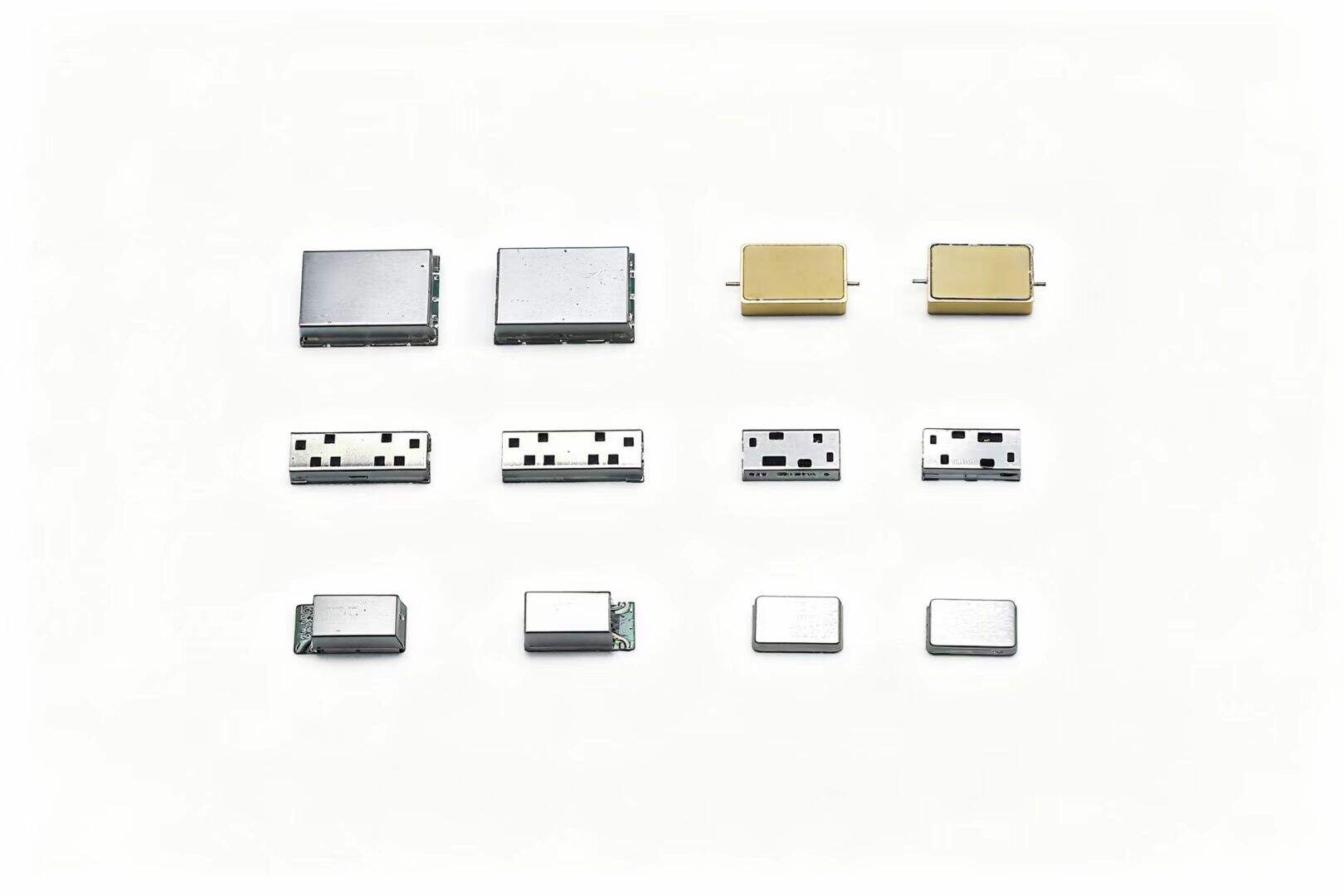
An lc band-pass filter represents one of the most fundamental yet powerful circuit configurations in modern electronics, serving as the cornerstone for frequency-selective applications across telecommunications, audio processing, and signal conditioning systems. These passive filter circuits utilize the complementary characteristics of inductors and capacitors to create precise frequency windows that allow specific signal ranges to pass while attenuating unwanted frequencies. Understanding the principles and practical implementation of lc band-pass filter designs enables engineers to develop sophisticated filtering solutions that meet stringent performance requirements in both analog and digital signal processing environments.
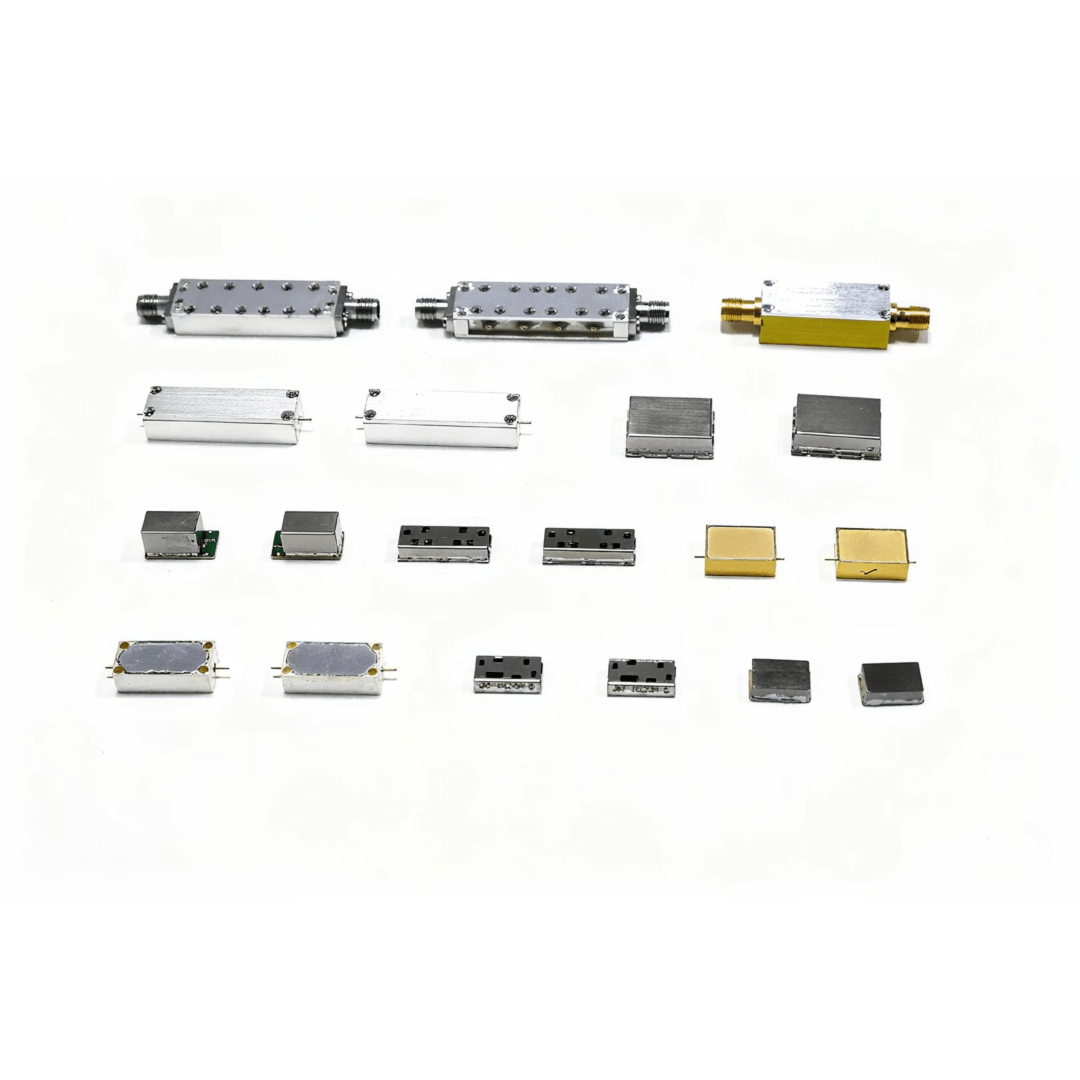
Fundamental Principles of LC Band-Pass Filter Operation
Resonant Frequency Characteristics
The operational foundation of any lc band-pass filter relies on the resonant frequency phenomenon that occurs when inductive and capacitive reactances balance each other within the circuit topology. At the resonant frequency, the inductor and capacitor create a condition where their reactances are equal in magnitude but opposite in phase, resulting in minimal impedance for the desired frequency band. This resonant behavior forms the center frequency around which the band-pass characteristics develop, creating a frequency window with maximum signal transmission and steep roll-off characteristics on either side of the pass band.
The mathematical relationship governing resonant frequency calculation follows the standard formula where the center frequency equals one divided by two pi times the square root of the product of inductance and capacitance values. This fundamental equation provides engineers with the primary design parameter for establishing the desired frequency response characteristics. The quality factor, commonly referred to as Q-factor, determines the bandwidth and selectivity of the lc band-pass filter, with higher Q values producing narrower pass bands and sharper frequency discrimination capabilities.
Energy Storage and Transfer Mechanisms
Within an lc band-pass filter circuit, energy continuously oscillates between the magnetic field of the inductor and the electric field of the capacitor at the resonant frequency. This energy exchange mechanism creates the selective frequency response that characterizes band-pass behavior, allowing signals at or near the resonant frequency to pass through with minimal attenuation while progressively attenuating signals that deviate from the center frequency. The inductor stores energy in its magnetic field when current flows through its windings, while the capacitor stores energy in its electric field when voltage appears across its plates.
The efficiency of this energy transfer process directly influences the overall performance characteristics of the lc band-pass filter, including insertion loss, bandwidth definition, and frequency selectivity. Understanding these energy dynamics enables designers to optimize component selection and circuit topology to achieve specific filtering objectives while maintaining acceptable signal integrity throughout the desired frequency range.
Circuit Topologies and Design Configurations
Series LC Band-Pass Filter Architecture
Series lc band-pass filter configurations position the inductor and capacitor in series with the signal path, creating a low-impedance condition at the resonant frequency that allows maximum signal transmission. This topology demonstrates excellent frequency selectivity characteristics, particularly for applications requiring sharp band-pass response curves and high attenuation of out-of-band signals. The series arrangement produces a voltage divider effect at frequencies away from resonance, where either inductive or capacitive reactance dominates the impedance characteristics and reduces signal transmission accordingly.
Design considerations for series lc band-pass filter implementations include source and load impedance matching requirements, component tolerance effects on frequency response accuracy, and thermal stability considerations for maintaining consistent performance across operating temperature ranges. The series topology typically exhibits lower insertion loss at the center frequency compared to parallel configurations, making it particularly suitable for applications where signal integrity and minimal attenuation are critical design requirements.
Parallel LC Band-Pass Filter Design
Parallel lc band-pass filter architectures connect the inductor and capacitor in parallel with each other, creating a high-impedance condition at the resonant frequency that effectively blocks signal transmission at the center frequency while allowing frequencies above and below resonance to pass through with varying degrees of attenuation. However, when implemented as part of a larger filter network with additional reactive components, parallel LC combinations can contribute to band-pass characteristics through careful impedance manipulation and frequency-dependent behavior.
The implementation of parallel LC sections within multi-stage lc band-pass filter networks enables designers to create complex frequency response characteristics with multiple poles and zeros, providing enhanced selectivity and improved out-of-band rejection compared to simple single-stage designs. These sophisticated configurations require careful analysis of inter-stage coupling effects and impedance interactions to ensure stable operation and predictable frequency response characteristics across the intended operating bandwidth.
Component Selection and Specification Criteria
Inductor Characteristics and Performance Parameters
Selecting appropriate inductors for lc band-pass filter applications requires careful consideration of multiple performance parameters including inductance value accuracy, quality factor specifications, current handling capabilities, and frequency stability characteristics. The inductor quality factor significantly influences the overall Q-factor of the lc band-pass filter, with higher quality inductors contributing to sharper frequency response characteristics and reduced insertion loss at the center frequency. Core material selection affects both the inductance stability and the frequency range over which the inductor maintains consistent performance characteristics.
Temperature coefficient specifications become particularly important for lc band-pass filter applications requiring stable center frequency operation across wide temperature ranges. Air-core inductors typically offer excellent temperature stability and low loss characteristics but may require larger physical dimensions to achieve higher inductance values. Ferrite-core inductors provide compact solutions with higher inductance densities but may exhibit temperature-dependent behavior that requires compensation techniques in precision filtering applications.
Capacitor Selection Guidelines
Capacitor selection for lc band-pass filter circuits involves evaluating dielectric characteristics, temperature stability, voltage handling capabilities, and frequency-dependent behavior to ensure consistent filter performance across all operating conditions. Ceramic capacitors offer excellent high-frequency performance and compact packaging but may exhibit significant capacitance variation with applied voltage and temperature changes. Film capacitors provide superior stability characteristics and low loss tangent values, making them ideal for precision lc band-pass filter applications where frequency accuracy and low distortion are critical requirements.
The effective series resistance of capacitors contributes to the overall loss characteristics of the lc band-pass filter and influences the achievable Q-factor and bandwidth performance. Selecting capacitors with low equivalent series resistance values helps maintain sharp frequency response characteristics and minimizes insertion loss at the desired center frequency. Additionally, voltage coefficient specifications must be considered for applications where signal levels may vary significantly, as voltage-dependent capacitance changes can shift the center frequency and alter the band-pass characteristics of the filter circuit.
Design Calculation Methods and Optimization Techniques
Mathematical Design Approach
The design process for lc band-pass filter circuits begins with establishing the target center frequency, desired bandwidth, and required attenuation characteristics for the specific application requirements. Mathematical calculations involve determining the appropriate inductance and capacitance values using the resonant frequency formula, followed by bandwidth calculations based on the desired Q-factor specifications. The relationship between component values, Q-factor, and bandwidth provides the foundation for initial component selection and circuit topology decisions.
Advanced design techniques incorporate impedance matching considerations, load effects, and component tolerance analysis to ensure robust filter performance across manufacturing variations and environmental conditions. Computer-aided design tools enable iterative optimization of lc band-pass filter parameters, allowing designers to evaluate trade-offs between frequency response characteristics, component availability, and cost considerations while maintaining performance specifications within acceptable limits.
Performance Optimization Strategies
Optimizing lc band-pass filter performance involves balancing multiple competing factors including frequency selectivity, insertion loss, bandwidth characteristics, and component practicality considerations. Cascading multiple lc band-pass filter sections can improve frequency selectivity and out-of-band rejection at the expense of increased insertion loss and circuit complexity. Careful attention to inter-stage impedance matching ensures maximum power transfer and prevents unwanted reflections that could degrade frequency response characteristics.
Component quality optimization focuses on selecting inductors and capacitors with complementary temperature coefficients to minimize center frequency drift across operating temperature ranges. Additionally, implementing proper shielding and layout techniques prevents unwanted coupling between circuit elements and external interference sources that could compromise the filtering performance of the lc band-pass filter circuit.
Practical Implementation and Construction Considerations
PCB Layout and Physical Design
Implementing lc band-pass filter circuits on printed circuit boards requires careful attention to component placement, trace routing, and ground plane design to maintain the theoretical frequency response characteristics predicted by circuit analysis. Minimizing parasitic inductances and capacitances through proper layout techniques ensures that the actual filter performance closely matches the designed specifications. Component placement should consider magnetic and electric field interactions between inductors and other circuit elements to prevent unwanted coupling effects that could distort the frequency response.
Ground plane continuity and return path optimization become critical factors in high-frequency lc band-pass filter implementations, where even small parasitic elements can significantly impact performance. Proper via placement and trace impedance control help maintain signal integrity throughout the filter circuit while minimizing radiation and susceptibility to external interference sources that could degrade filtering effectiveness.
Testing and Validation Procedures
Comprehensive testing of lc band-pass filter circuits involves frequency response measurements using network analyzers or spectrum analyzers to verify center frequency accuracy, bandwidth characteristics, insertion loss specifications, and out-of-band rejection performance. Swept frequency measurements reveal the actual frequency response curve and enable comparison with theoretical predictions and design specifications. Temperature testing validates the stability of filter characteristics across the intended operating temperature range and identifies any frequency drift that may require compensation techniques.
Performance validation should also include evaluation of the lc band-pass filter behavior under various load conditions and signal levels to ensure robust operation across all anticipated application scenarios. Long-term stability testing provides confidence in the filter's ability to maintain specifications throughout its operational lifetime, while stress testing reveals potential failure modes and reliability limitations that may affect system performance.
Applications and Industry Use Cases
Communications and RF Systems
Communications systems extensively utilize lc band-pass filter circuits for channel selection, interference rejection, and signal conditioning applications across a wide range of frequency bands from audio frequencies through microwave regions. Radio frequency front-end designs incorporate lc band-pass filter stages to isolate desired signal channels while rejecting out-of-band interference and harmonics that could degrade system performance. The ability to create sharp frequency transitions with relatively simple component configurations makes lc band-pass filter designs particularly attractive for cost-sensitive communications applications.
Antenna systems often employ lc band-pass filter networks to improve selectivity and reduce interference from adjacent channels or spurious emissions from transmitter systems. The passive nature of lc band-pass filter circuits eliminates the need for external power supplies and provides inherent reliability advantages in remote or harsh environmental applications where active filtering solutions may not be practical or cost-effective.
Audio and Signal Processing Applications
Audio equipment designers implement lc band-pass filter circuits for crossover networks, tone shaping, and frequency isolation applications where passive filtering provides the desired frequency response characteristics without introducing distortion or noise penalties associated with active filtering approaches. The natural resonant behavior of lc band-pass filter configurations can enhance specific frequency ranges while attenuating unwanted frequency components, making them valuable tools for audio signal conditioning and enhancement applications.
Professional audio systems utilize precision lc band-pass filter designs for speaker crossover networks, where accurate frequency division ensures optimal driver performance and coherent sound reproduction across the audio spectrum. The power handling capabilities of passive lc band-pass filter circuits make them particularly suitable for high-power audio applications where active filtering solutions may introduce thermal management challenges or reliability concerns.
Advanced Design Techniques and Modern Developments
Multi-Stage Filter Networks
Advanced lc band-pass filter implementations often employ multi-stage cascaded configurations to achieve enhanced frequency selectivity and improved out-of-band rejection characteristics compared to single-stage designs. These sophisticated filter networks require careful analysis of inter-stage impedance interactions and coupling effects to ensure predictable frequency response characteristics and stable operation across the intended bandwidth. Proper impedance matching between cascaded stages maximizes power transfer efficiency and prevents unwanted reflections that could create ripple in the pass band or reduce out-of-band attenuation.
Computer-aided design tools enable optimization of multi-stage lc band-pass filter networks through iterative analysis and synthesis techniques that balance performance requirements with practical component constraints. Modern design methodologies incorporate statistical analysis of component tolerances and environmental variations to ensure robust filter performance across manufacturing variations and operating conditions while maintaining acceptable yield rates in production environments.
Integration with Modern Circuit Technologies
Contemporary electronic systems increasingly integrate lc band-pass filter circuits with semiconductor technologies through hybrid approaches that combine the inherent advantages of passive filtering with the flexibility and programmability of active circuit elements. These hybrid implementations may incorporate tunable components or switching elements that enable adaptive frequency response characteristics while maintaining the fundamental filtering properties of the lc band-pass filter topology.
Surface-mount technology implementations of lc band-pass filter circuits enable compact designs suitable for modern portable electronic devices while maintaining performance characteristics comparable to traditional through-hole component implementations. Advanced packaging techniques and materials enable higher frequency operation and improved temperature stability compared to conventional discrete component approaches, expanding the applicability of lc band-pass filter solutions to demanding modern applications.
FAQ
What determines the center frequency of an lc band-pass filter
The center frequency of an lc band-pass filter is determined by the resonant frequency formula, which equals one divided by two pi times the square root of the product of inductance and capacitance values. This mathematical relationship establishes the frequency at which the inductive and capacitive reactances are equal in magnitude, creating the minimum impedance condition that defines the center of the pass band. Component tolerances and parasitic elements can shift the actual center frequency from the calculated value, requiring careful component selection and circuit design to achieve the desired frequency response characteristics.
How does the Q-factor affect lc band-pass filter performance
The Q-factor directly influences both the bandwidth and frequency selectivity of an lc band-pass filter, with higher Q values producing narrower pass bands and sharper roll-off characteristics outside the desired frequency range. A higher Q-factor results from lower resistance in the circuit elements, particularly the equivalent series resistance of the inductor and capacitor components. The Q-factor determines how quickly the filter response transitions from the pass band to the stop band regions, making it a critical parameter for applications requiring precise frequency discrimination and interference rejection capabilities.
What are the main advantages of using passive lc band-pass filters
Passive lc band-pass filters offer several significant advantages including no requirement for external power supplies, inherent stability and reliability, low noise characteristics, and excellent power handling capabilities compared to active filtering solutions. These filters provide natural frequency selectivity through resonant behavior without introducing distortion or noise penalties associated with active circuit elements. The passive nature also eliminates concerns about power consumption, thermal management, and supply voltage variations that can affect active filter performance, making lc band-pass filter designs particularly suitable for battery-powered applications and harsh environmental conditions.
How do temperature variations affect lc band-pass filter operation
Temperature variations can affect lc band-pass filter performance through changes in component values, particularly the temperature coefficients of inductors and capacitors that determine the center frequency stability. Inductor temperature coefficients depend on core material properties and winding construction, while capacitor temperature coefficients vary significantly based on dielectric material selection. Designing temperature-stable lc band-pass filter circuits requires selecting components with complementary temperature coefficients or implementing temperature compensation techniques to maintain consistent frequency response characteristics across the intended operating temperature range.
Table of Contents
- Fundamental Principles of LC Band-Pass Filter Operation
- Circuit Topologies and Design Configurations
- Component Selection and Specification Criteria
- Design Calculation Methods and Optimization Techniques
- Practical Implementation and Construction Considerations
- Applications and Industry Use Cases
- Advanced Design Techniques and Modern Developments
- FAQ