
 EN
EN
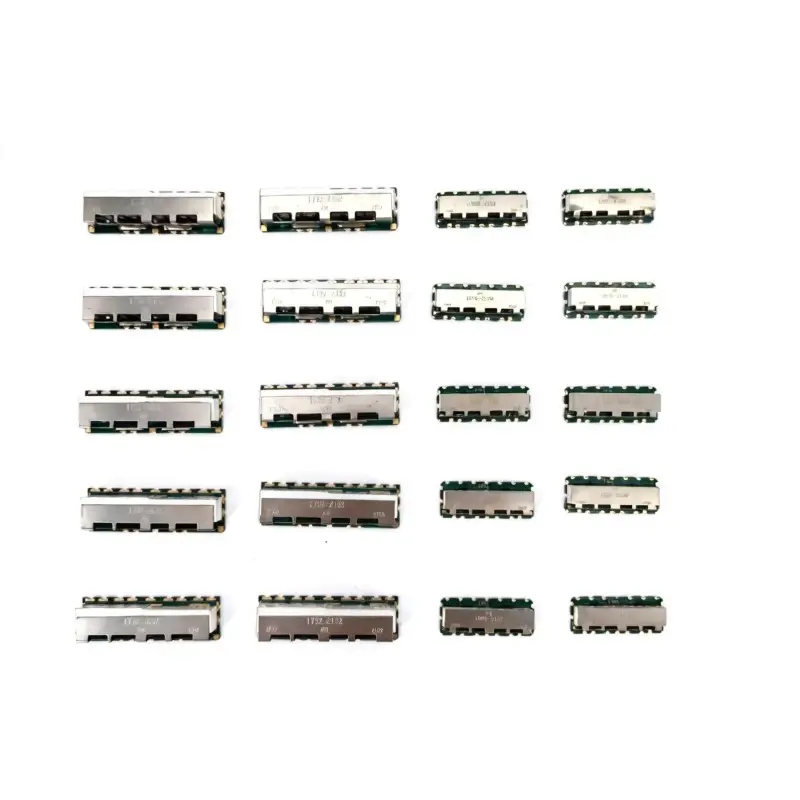
In the rapidly evolving landscape of wireless communication technology, the microwave dielectric ceramic duplexer has emerged as a critical component for achieving superior performance in modern RF systems. These sophisticated devices enable simultaneous transmission and reception of signals within the same frequency band, making them indispensable for applications ranging from cellular base stations to satellite communications. The unique properties of dielectric ceramic materials provide exceptional filtering characteristics that traditional metal-based solutions cannot match, particularly in demanding high-frequency environments where precision and reliability are paramount.
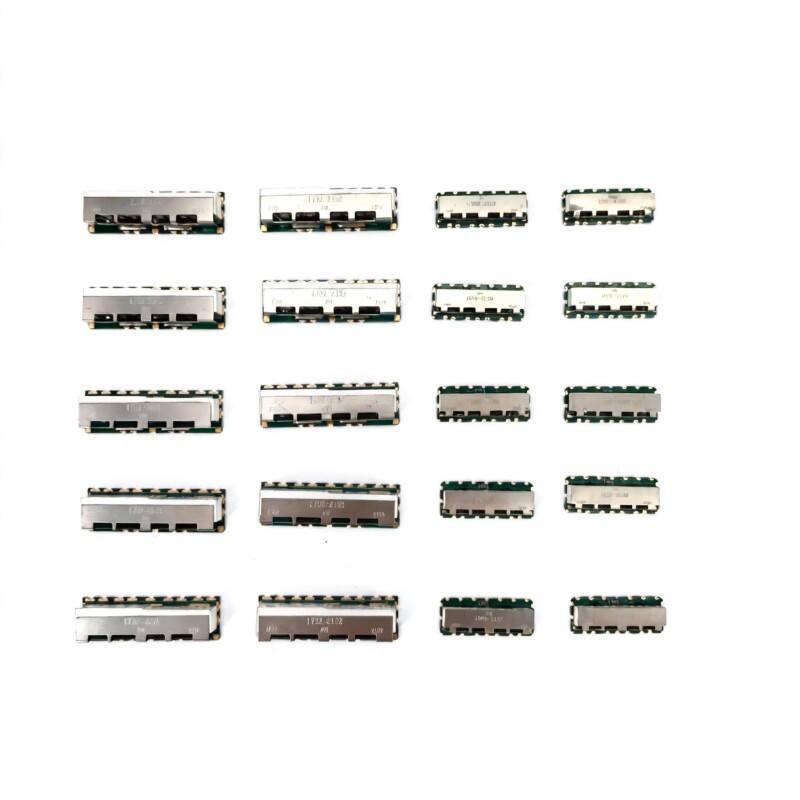
Understanding Microwave Dielectric Ceramic Technology
Fundamental Principles of Dielectric Ceramics
Dielectric ceramic materials possess unique electromagnetic properties that make them ideal for microwave frequency applications. These materials exhibit low dielectric loss, high dielectric constant, and excellent temperature stability, which are essential characteristics for maintaining signal integrity in demanding RF environments. The molecular structure of these ceramics creates microscopic resonant cavities that can be precisely tuned to specific frequencies, enabling the creation of highly selective filtering elements within a microwave dielectric ceramic duplexer assembly.
The manufacturing process involves carefully controlled sintering of ceramic powders at extremely high temperatures, resulting in a crystalline structure with predictable electromagnetic properties. This precision manufacturing allows engineers to create duplexers with exact frequency response characteristics, ensuring optimal performance across the desired operating bandwidth. The inherent stability of ceramic materials also provides excellent long-term reliability, making these components suitable for mission-critical applications where consistent performance is essential.
Advantages Over Traditional Metal Cavity Solutions
When compared to conventional metal cavity duplexers, the microwave dielectric ceramic duplexer offers significant advantages in terms of size, weight, and performance. Ceramic materials can achieve the same filtering performance in a fraction of the physical space required by metal cavities, enabling more compact system designs and reduced installation costs. The miniaturization benefits are particularly important in modern communication systems where space constraints are increasingly challenging.
Additionally, ceramic duplexers exhibit superior thermal stability and reduced sensitivity to mechanical vibrations compared to their metal counterparts. This enhanced stability translates to more consistent performance across varying environmental conditions, reducing the need for frequent recalibration and maintenance. The robust nature of ceramic materials also provides excellent resistance to corrosion and oxidation, ensuring long-term reliability in harsh operating environments.
Technical Specifications and Performance Characteristics
Frequency Range and Bandwidth Capabilities
Modern microwave dielectric ceramic duplexer designs can operate across a wide range of frequencies, typically spanning from 800 MHz to several gigahertz, depending on the specific application requirements. The precise frequency response is achieved through careful optimization of the ceramic resonator dimensions and coupling mechanisms. Advanced designs can achieve insertion losses as low as 0.5 dB while maintaining isolation levels exceeding 80 dB between transmit and receive paths.
The bandwidth characteristics of these devices can be tailored to match specific system requirements, with typical bandwidths ranging from narrow-band applications of a few megahertz to broadband solutions covering several hundred megahertz. The ability to customize the frequency response makes the microwave dielectric ceramic duplexer suitable for diverse applications, from narrow-band point-to-point links to wideband cellular communication systems.
Power Handling and Thermal Management
Power handling capability is a critical specification for any RF component, and ceramic duplexers excel in this regard due to the excellent thermal properties of ceramic materials. These devices can typically handle continuous power levels of several hundred watts while maintaining stable performance characteristics. The high thermal conductivity of ceramics enables efficient heat dissipation, preventing thermal-related performance degradation even under demanding operating conditions.
Thermal management considerations include not only the power handling capacity but also the temperature coefficient of frequency, which determines how the device performance changes with temperature variations. High-quality microwave dielectric ceramic duplexer designs incorporate materials with near-zero temperature coefficients, ensuring stable frequency response across the entire operating temperature range without requiring active temperature compensation.
Applications and Market Implementation
Cellular Base Station Integration
One of the primary applications for the microwave dielectric ceramic duplexer is in cellular base station equipment, where these components enable efficient frequency division duplex operation. Base stations require simultaneous transmission and reception capabilities with minimal interference, making the superior isolation characteristics of ceramic duplexers essential for optimal network performance. The compact size of ceramic solutions also enables higher channel density in multi-band base station configurations.
The deployment of 5G networks has further increased the demand for high-performance duplexers capable of handling the stringent requirements of next-generation wireless systems. These applications require not only excellent electrical performance but also the ability to operate reliably in outdoor environments with extreme temperature variations and weather conditions. The robust nature of ceramic materials makes them particularly well-suited for these challenging deployment scenarios.
Satellite Communication Systems
Satellite communication systems represent another significant application area where the unique advantages of the microwave dielectric ceramic duplexer are highly valued. The space environment presents extreme challenges in terms of temperature cycling, radiation exposure, and mechanical stress, all of which ceramic materials handle exceptionally well. The lightweight nature of ceramic solutions also helps minimize launch costs, which is a critical consideration in satellite system design.
Ground-based satellite terminals also benefit from the superior performance characteristics of ceramic duplexers, particularly in applications requiring high gain and low noise performance. The excellent phase stability and low insertion loss of these components contribute to improved link budgets and enhanced communication reliability, which are essential for maintaining consistent satellite connectivity in demanding applications.
Design Considerations and Selection Criteria
Electrical Performance Requirements
Selecting the appropriate microwave dielectric ceramic duplexer for a specific application requires careful consideration of multiple electrical performance parameters. Key specifications include insertion loss, isolation, return loss, and power handling capability, all of which must be evaluated in the context of the overall system requirements. The frequency response shape is equally important, as it determines how well the duplexer can separate transmit and receive signals while maintaining acceptable performance across the desired bandwidth.
Linearity considerations are also crucial, particularly in high-power applications where intermodulation products can cause interference with adjacent channels or services. High-quality ceramic duplexers are designed to minimize nonlinear effects through careful material selection and structural optimization, ensuring clean signal transmission even at maximum power levels.
Environmental and Mechanical Factors
Environmental considerations play a significant role in duplexer selection, particularly for outdoor installations where temperature extremes, humidity, and mechanical vibrations are concerns. The microwave dielectric ceramic duplexer offers inherent advantages in these areas due to the stability and durability of ceramic materials. However, proper packaging and sealing are still essential to prevent moisture ingress and ensure long-term reliability.
Mechanical considerations include mounting requirements, connector types, and overall form factor constraints. Modern ceramic duplexer designs offer flexible mounting options and standardized connector interfaces to simplify integration into existing systems. The reduced size and weight compared to metal cavity alternatives often enable retrofitting applications where space is limited.
Manufacturing and Quality Control Processes
Advanced Ceramic Processing Techniques
The manufacturing of high-performance microwave dielectric ceramic duplexer components requires sophisticated processing techniques and stringent quality control measures. The process begins with the precise formulation of ceramic powders, which must be carefully controlled to achieve the desired dielectric properties. Advanced mixing and homogenization techniques ensure uniform distribution of constituents, which is critical for consistent electrical performance across production batches.
Forming processes such as dry pressing or tape casting are used to create the initial ceramic shapes, followed by carefully controlled sintering cycles that develop the final crystal structure. The sintering temperature profile must be precisely maintained to achieve optimal density and dielectric properties while avoiding defects that could compromise performance. Modern manufacturing facilities employ automated process control systems to maintain consistency and minimize variations between individual units.
Testing and Validation Procedures
Comprehensive testing procedures are essential to ensure that each microwave dielectric ceramic duplexer meets its specified performance requirements. Electrical testing includes measurement of insertion loss, isolation, return loss, and power handling capability across the entire operating frequency range. Advanced network analyzer systems provide precise characterization of the frequency response, enabling detection of any performance anomalies that might affect system operation.
Environmental testing protocols simulate the operating conditions that the duplexer will encounter in actual deployment, including temperature cycling, humidity exposure, and vibration testing. These tests validate the long-term reliability of the ceramic materials and packaging systems, ensuring that performance specifications will be maintained throughout the expected service life. Quality control documentation provides traceability for each component, enabling rapid identification and resolution of any field issues that may arise.
Future Developments and Market Trends
Advanced Material Technologies
Research and development efforts in ceramic materials continue to push the boundaries of what is possible with microwave dielectric ceramic duplexer technology. New ceramic formulations are being developed that offer even lower loss characteristics, higher temperature coefficients of frequency stability, and improved power handling capabilities. These advances will enable the creation of next-generation duplexers that can meet the increasingly demanding requirements of emerging wireless technologies.
Nanotechnology applications in ceramic processing are opening new possibilities for controlling material properties at the molecular level. These techniques may enable the creation of gradient dielectric structures that provide enhanced performance characteristics while maintaining the compact size advantages of ceramic solutions. The integration of advanced materials with innovative design approaches promises to deliver significant performance improvements in future microwave dielectric ceramic duplexer products.
Integration with Software-Defined Systems
The evolution toward software-defined radio and network systems is creating new requirements for RF components that can adapt to changing operating conditions and frequency assignments. While ceramic duplexers are inherently fixed-frequency devices, new design approaches are being developed to create tunable or reconfigurable ceramic filter structures. These developments may enable the creation of adaptive microwave dielectric ceramic duplexer systems that can optimize their performance based on real-time operating conditions.
Integration with smart antenna systems and beamforming technologies is also driving innovation in duplexer design. Future systems may incorporate multiple duplexer elements in phased array configurations, requiring new approaches to thermal management, electrical coupling, and mechanical packaging. These advanced applications will continue to drive demand for high-performance ceramic duplexer solutions.
FAQ
What are the main advantages of using ceramic materials in microwave duplexers
Ceramic materials offer several key advantages in microwave duplexer applications, including significantly smaller size and weight compared to metal cavity solutions, superior temperature stability, excellent power handling capabilities, and reduced sensitivity to mechanical vibrations. The high dielectric constant of ceramics enables compact designs while maintaining exceptional filtering performance, and the inherent stability of ceramic materials ensures consistent performance across varying environmental conditions without requiring frequent recalibration.
How do ceramic duplexers compare to traditional metal cavity designs in terms of performance
Ceramic duplexers typically achieve comparable or superior electrical performance to metal cavity designs while occupying a fraction of the physical space. They offer excellent insertion loss characteristics, high isolation between transmit and receive paths, and outstanding power handling capabilities. The thermal stability of ceramic materials often provides better long-term frequency stability compared to metal cavities, which can drift due to thermal expansion and mechanical stress effects.
What frequency ranges are typically covered by microwave dielectric ceramic duplexers
Modern microwave dielectric ceramic duplexer designs can operate across a wide frequency spectrum, typically ranging from 800 MHz to several gigahertz depending on the specific application requirements. The exact frequency range and bandwidth characteristics are customizable based on the ceramic material properties and resonator geometry, allowing for optimization across narrow-band applications of a few megahertz to broadband solutions covering several hundred megahertz.
What are the key considerations for selecting a ceramic duplexer for a specific application
Key selection criteria include electrical performance requirements such as insertion loss, isolation, return loss, and power handling capability, as well as environmental factors like operating temperature range, humidity exposure, and mechanical vibration requirements. Other important considerations include frequency response characteristics, form factor constraints, mounting requirements, connector types, and long-term reliability expectations. The specific application environment and performance specifications will determine the optimal microwave dielectric ceramic duplexer configuration for each use case.
Table of Contents
- Understanding Microwave Dielectric Ceramic Technology
- Technical Specifications and Performance Characteristics
- Applications and Market Implementation
- Design Considerations and Selection Criteria
- Manufacturing and Quality Control Processes
- Future Developments and Market Trends
-
FAQ
- What are the main advantages of using ceramic materials in microwave duplexers
- How do ceramic duplexers compare to traditional metal cavity designs in terms of performance
- What frequency ranges are typically covered by microwave dielectric ceramic duplexers
- What are the key considerations for selecting a ceramic duplexer for a specific application