
 EN
EN
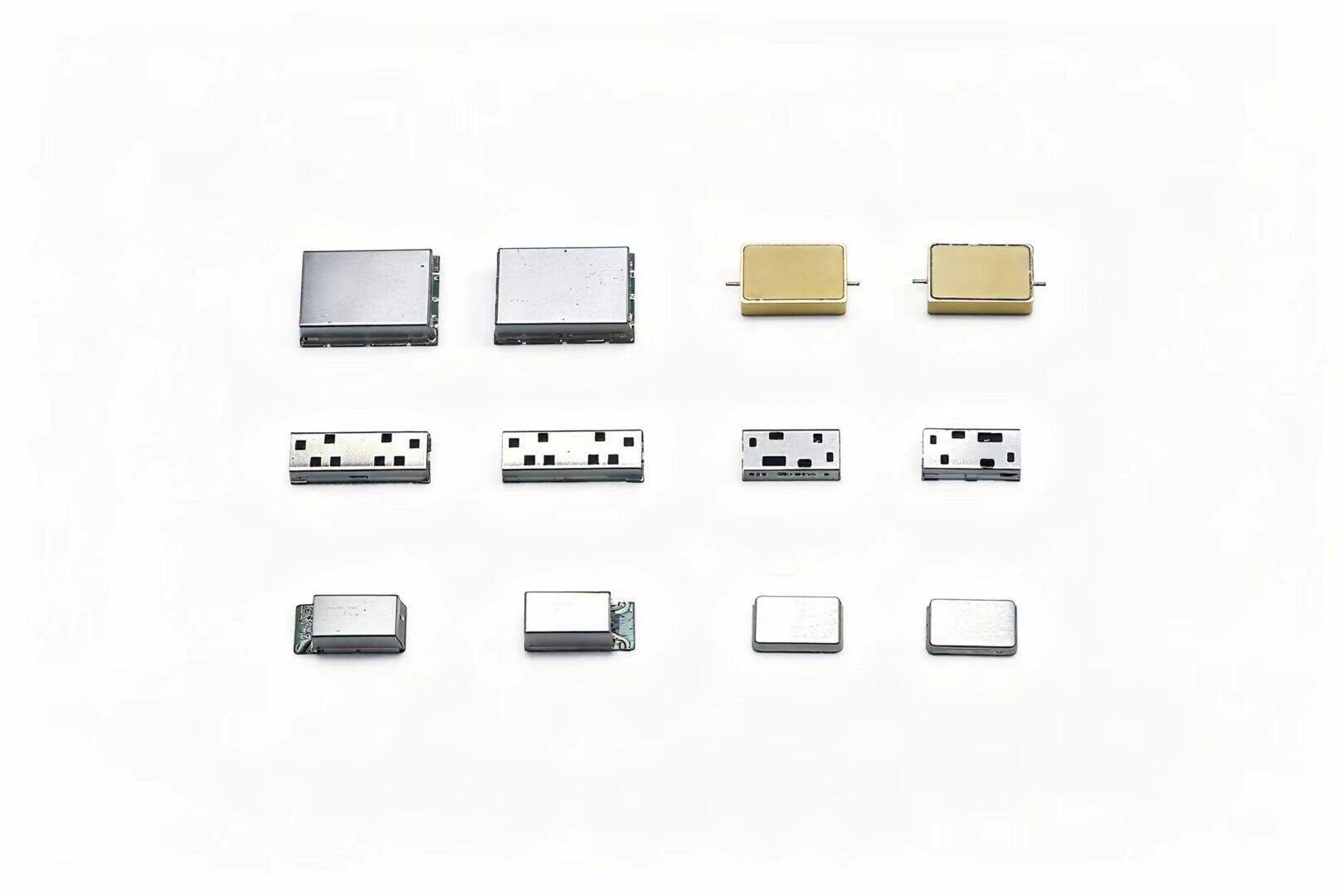
Electronic circuits in modern communication systems require precise frequency control to eliminate unwanted signals and noise. An lc band-stop filter serves as a critical component in achieving this goal by attenuating specific frequency ranges while allowing others to pass through unimpeded. These filters have become indispensable in applications ranging from radio frequency communications to power supply designs where interference suppression is paramount.
The fundamental principle behind an lc band-stop filter lies in the interaction between inductors and capacitors to create a notch response at predetermined frequencies. Unlike bandpass filters that allow specific frequencies to pass, band-stop filters actively reject frequencies within their stopband while maintaining minimal attenuation outside this range. This selective frequency rejection makes them valuable for eliminating spurious signals, harmonics, and interference that could compromise system performance.
Understanding the design parameters and applications of lc band-stop filter circuits is essential for engineers working in RF design, telecommunications, and electronic system development. The growing complexity of modern electronic devices demands sophisticated filtering solutions that can handle multiple frequency bands while maintaining signal integrity. This comprehensive guide explores the theoretical foundations, practical design considerations, and real-world applications of these versatile filtering components.
Theoretical Foundations of LC Band-Stop Filters
Basic Circuit Topology and Operation
The most fundamental lc band-stop filter configuration consists of a parallel LC resonant circuit connected in series with the signal path, or alternatively, a series LC circuit connected in parallel. The parallel resonant configuration creates high impedance at the resonant frequency, effectively blocking signal transmission at that specific frequency. This impedance characteristic forms the foundation of the filter's rejection capability.
At the resonant frequency, the inductive and capacitive reactances cancel each other out, creating a purely resistive impedance determined by the parasitic resistance of the components. Below the resonant frequency, the capacitor dominates the impedance characteristics, while above the resonant frequency, the inductor's reactance becomes more significant. This frequency-dependent behavior creates the characteristic notch response that defines an lc band-stop filter.
The quality factor, or Q, of the resonant circuit directly influences the filter's selectivity and bandwidth. Higher Q values result in narrower rejection bands with steeper roll-off characteristics, while lower Q values produce broader stopbands with more gradual transitions. Engineers must carefully balance Q requirements with practical considerations such as component tolerances and manufacturing constraints.
Mathematical Analysis and Transfer Functions
The transfer function of an lc band-stop filter can be expressed in terms of complex frequency variables, providing insight into both magnitude and phase responses. For a simple parallel LC circuit in series with the signal path, the transfer function exhibits zeros at the resonant frequency and poles that determine the filter's bandwidth and roll-off characteristics.
Frequency response calculations involve analyzing the impedance relationships between the reactive components across the frequency spectrum. The impedance of the parallel LC combination varies dramatically with frequency, reaching maximum values at resonance and decreasing on either side. This impedance variation translates directly into the attenuation characteristics of the lc band-stop filter.
Phase response analysis reveals additional insights into filter behavior, particularly regarding group delay characteristics. While the magnitude response shows the attenuation profile, phase response indicates how different frequency components within a signal may experience varying time delays. Understanding both magnitude and phase behavior is crucial for applications involving complex modulated signals or pulse transmission.
Design Considerations and Component Selection
Inductor Selection and Characteristics
Selecting appropriate inductors for an lc band-stop filter requires careful consideration of several key parameters including inductance value, self-resonant frequency, quality factor, and current handling capability. The inductor's self-resonant frequency must be significantly higher than the intended operating frequency to avoid unwanted resonances that could compromise filter performance.
Core material selection impacts both the inductance value and the frequency response characteristics. Air core inductors offer excellent stability and low loss at high frequencies but may require larger physical dimensions. Ferrite core inductors provide higher inductance values in compact packages but may exhibit frequency-dependent permeability that affects the lc band-stop filter response.
Temperature stability and aging characteristics of inductors become critical factors in precision applications. Wire-wound inductors typically offer better stability compared to chip inductors, but at the cost of increased size and potential parasitic capacitance. The choice between inductor types requires balancing performance requirements with size and cost constraints.
Capacitor Technologies and Performance Trade-offs
Capacitor selection for lc band-stop filter applications involves evaluating dielectric materials, voltage ratings, temperature coefficients, and equivalent series resistance. Ceramic capacitors offer excellent high-frequency performance and stability but may exhibit voltage-dependent capacitance that can affect filter characteristics under varying signal conditions.
Film capacitors provide superior stability and low distortion characteristics, making them ideal for applications where signal integrity is paramount. However, their larger physical size may limit their use in compact circuit designs. Tantalum and aluminum electrolytic capacitors are generally unsuitable for RF applications due to high equivalent series resistance and poor high-frequency performance.
Parasitic inductance in capacitors becomes increasingly important at higher frequencies, potentially creating unwanted resonances that compromise the intended lc band-stop filter response. Surface-mount capacitors typically exhibit lower parasitic inductance compared to through-hole components, making them preferable for high-frequency applications. Component layout and interconnection methods also significantly impact parasitic effects.
Advanced Filter Configurations and Topologies
Multiple Stage Designs for Enhanced Performance
Single-stage lc band-stop filter circuits may not provide sufficient attenuation for demanding applications, necessitating multiple-stage designs that cascade several filter sections. Each stage contributes additional attenuation at the rejection frequency while maintaining acceptable performance outside the stopband. Careful impedance matching between stages ensures optimal power transfer and prevents unwanted reflections.
Coupling between multiple stages can be achieved through various methods including direct connection, transformer coupling, or active buffering. Direct coupling offers simplicity and cost advantages but may limit design flexibility. Transformer coupling provides isolation between stages and enables impedance transformation, while active buffering allows for gain compensation and improved isolation.
The interaction between multiple stages creates complex frequency response characteristics that require careful analysis and optimization. Computer-aided design tools become essential for predicting and optimizing the overall response of multi-stage lc band-stop filter systems. Monte Carlo analysis helps evaluate the impact of component tolerances on filter performance and yield.
Bridged-T and Twin-T Configurations
Alternative topologies such as bridged-T and twin-T networks offer unique advantages for specific lc band-stop filter applications. The bridged-T configuration provides excellent stopband attenuation with minimal component count, making it attractive for cost-sensitive applications. The topology consists of series and parallel reactive elements arranged to create deep nulls at the design frequency.
Twin-T networks utilize two parallel signal paths with complementary frequency responses that combine to create the desired band-stop characteristic. This configuration offers inherent symmetry and can provide very deep attenuation at the notch frequency. However, component matching requirements are more stringent compared to simple LC configurations.
Both bridged-T and twin-T topologies require careful component selection and matching to achieve optimal performance. The sensitivity of these configurations to component variations makes them more suitable for applications where precision components and careful manufacturing processes are feasible. The enhanced performance capabilities justify the additional complexity in demanding applications.
Practical Applications and Industry Use Cases
RF Communication Systems and Interference Suppression
Modern RF communication systems rely heavily on lc band-stop filter technology to eliminate spurious signals and harmonics that could interfere with desired communications. Cellular base stations, for example, utilize these filters to suppress transmitter harmonics that might interfere with receiver bands or adjacent channels. The ability to selectively attenuate specific frequencies while preserving signal integrity makes these filters indispensable in contemporary wireless infrastructure.
Satellite communication systems present unique challenges that benefit from specialized lc band-stop filter designs. The harsh environment of space applications demands filters with exceptional reliability and stability over wide temperature ranges. Additionally, the limited power budgets in satellite systems require filters with minimal insertion loss while maintaining effective interference suppression.
Military and aerospace applications often require lc band-stop filter solutions that can withstand extreme environmental conditions while providing predictable performance. These applications may involve exposure to high levels of electromagnetic interference, temperature extremes, and mechanical stress. Component selection and circuit design must account for these harsh operating conditions while maintaining reliable performance throughout the system's operational lifetime.
Power Supply Filtering and EMI Reduction
Switching power supplies generate significant harmonic content that can interfere with sensitive analog circuits and violate electromagnetic compatibility regulations. An lc band-stop filter strategically placed in the power supply circuit can effectively attenuate specific harmonic frequencies while maintaining efficient power transfer. This application requires careful consideration of current handling capabilities and power dissipation in the filter components.
Medical equipment applications demand exceptional attention to EMI reduction and patient safety. Power supply filters in medical devices must meet stringent regulatory requirements while maintaining reliable operation. The lc band-stop filter configuration provides an effective solution for eliminating problematic frequencies without compromising the device's primary functionality. Component selection must prioritize reliability and long-term stability in these critical applications.
Industrial automation systems often operate in electrically noisy environments where power line interference and motor noise can disrupt sensitive control circuits. Implementing lc band-stop filter solutions at strategic points in the power distribution system can significantly improve system reliability and reduce false triggering of control circuits. The robustness and passive nature of LC filters make them ideal for these demanding industrial applications.
Design Tools and Simulation Techniques
Computer-Aided Design and Optimization
Modern lc band-stop filter design relies heavily on sophisticated computer-aided design tools that can simulate complex frequency responses and optimize component values for desired performance characteristics. SPICE-based simulators provide detailed analysis of circuit behavior including parasitic effects and component nonlinearities that may not be apparent in simplified analytical models.
Electromagnetic simulation tools become essential when designing lc band-stop filter circuits for high-frequency applications where component layout and interconnection geometry significantly impact performance. Three-dimensional electromagnetic analysis can reveal coupling effects, parasitic resonances, and radiation characteristics that influence filter behavior. These tools enable designers to optimize both electrical and physical aspects of the filter design.
Optimization algorithms integrated into design software can automatically adjust component values to meet specified performance criteria while considering manufacturing constraints and component availability. This automated approach significantly reduces design time and helps achieve optimal performance across multiple design objectives simultaneously. Monte Carlo analysis capabilities allow designers to evaluate design robustness against component variations and manufacturing tolerances.
Measurement and Characterization Techniques
Accurate measurement of lc band-stop filter performance requires specialized test equipment and measurement techniques. Vector network analyzers provide comprehensive characterization of both magnitude and phase response across wide frequency ranges. Proper calibration and measurement techniques are essential for obtaining reliable results, particularly at high frequencies where connector effects and cable losses become significant.
Time-domain measurements using network analyzers can provide additional insights into filter behavior, particularly regarding group delay characteristics and transient response. These measurements are especially valuable for applications involving pulse or digital signals where time-domain distortion may be more critical than frequency-domain specifications. Proper gating techniques can help isolate the filter response from measurement artifacts.
Component characterization becomes crucial when developing custom lc band-stop filter designs. Measuring the actual inductance, capacitance, and quality factor of components under operating conditions provides data necessary for accurate filter modeling. This measured data often differs significantly from manufacturer specifications, particularly at the frequency extremes or under varying environmental conditions.
Manufacturing and Quality Considerations
Production Tolerances and Yield Optimization
Manufacturing variations in inductor and capacitor values directly impact the performance of lc band-stop filter circuits. Standard component tolerances of five to ten percent can result in significant frequency shifts and changes in attenuation characteristics. Design margins must account for these variations while maintaining acceptable performance across the production yield. Statistical analysis of component variations helps predict overall filter performance distribution.
Temperature coefficient matching between inductors and capacitors can help minimize frequency drift over operating temperature ranges. Components with complementary temperature coefficients can partially cancel each other's temperature-dependent variations, improving overall stability. However, achieving this compensation requires careful component selection and may increase material costs. The benefits must be weighed against the additional complexity and cost.
Automated testing and tuning procedures can improve production yield and ensure consistent performance across manufactured units. Computer-controlled test systems can quickly characterize filter performance and identify units that fall outside acceptable specifications. In some cases, laser trimming or other adjustment techniques can bring marginal units within specification, improving overall yield and reducing manufacturing costs.
Reliability and Environmental Testing
Long-term reliability of lc band-stop filter circuits depends heavily on the stability and aging characteristics of the component materials and construction techniques. Accelerated aging tests expose filters to elevated temperatures, humidity, and other environmental stresses to predict long-term performance drift. These tests help establish confidence intervals for component stability and guide warranty and service life predictions.
Vibration and shock testing becomes particularly important for lc band-stop filter applications in automotive, aerospace, and military systems. Mechanical stress can cause component value changes, connection failures, and structural damage that compromises filter performance. Proper component mounting and mechanical design considerations help ensure reliable operation under demanding mechanical environments.
Electromagnetic compatibility testing verifies that the lc band-stop filter performs its intended function without creating unwanted emissions or susceptibility to external interference. These tests often reveal design issues related to component layout, shielding, or grounding that may not be apparent during initial design verification. Compliance with applicable EMC standards ensures that the filter will operate reliably in its intended electromagnetic environment.
FAQ
What determines the center frequency of an lc band-stop filter
The center frequency of an lc band-stop filter is determined by the resonant frequency of the LC circuit, calculated using the formula f = 1/(2π√LC), where L is the inductance in henries and C is the capacitance in farads. This resonant frequency represents the point of maximum attenuation in the filter's response. Component tolerances and parasitic effects can cause the actual center frequency to deviate from the calculated value, requiring careful design margins and potentially component trimming for precision applications.
How does the quality factor affect filter performance
The quality factor (Q) of an lc band-stop filter determines the sharpness of the rejection notch and the bandwidth of the stopband. Higher Q values result in narrower rejection bands with steeper roll-off characteristics, providing more selective frequency rejection. However, high Q filters are also more sensitive to component variations and may exhibit greater insertion loss outside the stopband. The optimal Q value depends on the specific application requirements for selectivity, stability, and loss characteristics.
What are the main sources of insertion loss in LC filters
Insertion loss in lc band-stop filter circuits primarily results from the equivalent series resistance of the inductors and capacitors, skin effect losses in conductors, and dielectric losses in capacitor materials. At higher frequencies, radiation losses and coupling to nearby components can also contribute to overall loss. Minimizing insertion loss requires selecting high-quality components with low equivalent series resistance and implementing proper circuit layout techniques to reduce parasitic effects and coupling.
Can multiple notch frequencies be achieved with a single filter
Multiple notch frequencies can be achieved by cascading several lc band-stop filter stages, each tuned to different frequencies, or by using more complex circuit topologies that incorporate multiple resonant circuits. Each additional notch requires additional reactive components and careful impedance matching between sections. While this approach increases circuit complexity and cost, it provides the flexibility to suppress multiple interfering frequencies simultaneously. Alternative approaches include using higher-order filter designs or active filter implementations for applications requiring multiple precisely controlled notch frequencies.