
 EN
EN
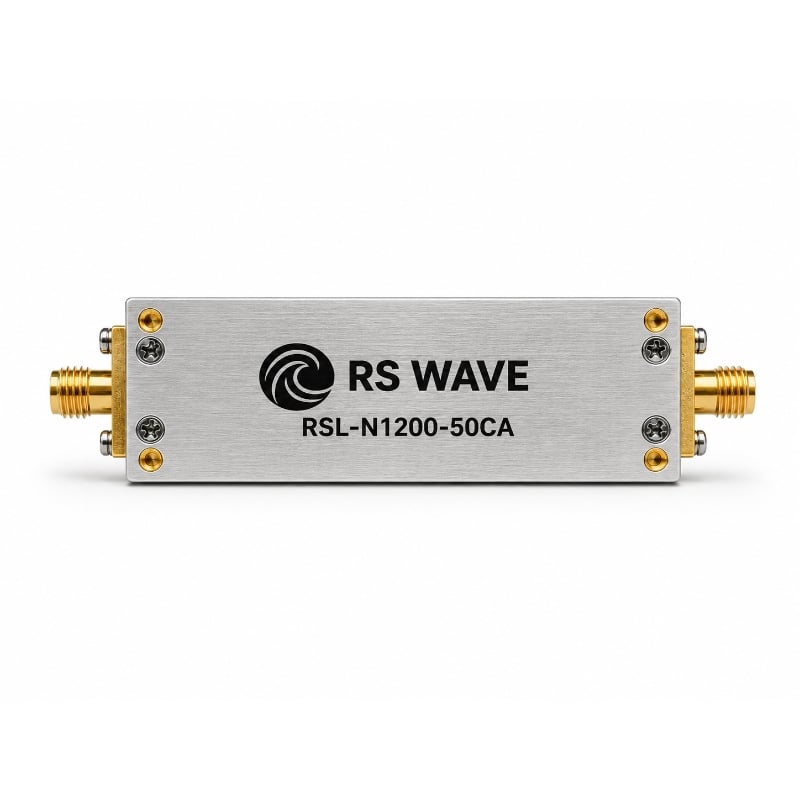
In modern radar systems, the RF front end determines whether signals can be accurately transmitted, received, and processed. Whether in drone radar, automotive radar, marine navigation radar, geological survey equipment, electronic countermeasure systems, or communication monitoring systems, target signals must be identified in complex electromagnetic environments. As a core passive component in RF and microwave circuits, the RF filter plays a key role in “selecting desired signals, suppressing interference, protecting the system, and improving stability.”
Why Do Radar Systems Need RF Filters?
The basic working principle of radar is to transmit electromagnetic waves at a specific frequency and receive echo signals reflected by the target. The challenge is that, in real-world environments, radar signals are not the only signals present. There are also communication signals, spurious signals, harmonics, adjacent-frequency interference, and internal device noise. If these unwanted signals enter the receiving chain directly, they will reduce the signal-to-noise ratio and affect target detection range, angle estimation, and velocity measurement accuracy.
The value of RF filters lies in maintaining low-loss transmission within the target frequency band while effectively suppressing signals outside the target band. For radar systems, this is not only a matter of signal quality, but also directly related to the detection reliability and anti-interference capability of the entire system.
Core Functions of RF Filters in Radar Front Ends
First, RF filters can improve frequency selectivity. Radar systems usually focus on a specific operating frequency band. Filters allow useful signals to pass through smoothly while weakening irrelevant frequency components. Especially in scenarios where multiple devices coexist, good out-of-band rejection can significantly reduce the impact of external signals on radar receivers.
Second, filters help reduce system noise. Low-noise amplifiers, mixers, and back-end processing modules in the radar receiving chain are highly sensitive to input signal quality. If the front end does not have sufficient filtering capability, noise and interference will be amplified together, and even advanced subsequent algorithms will find it difficult to fully compensate for this.
Third, RF filters can also protect key components. In high-power or complex electromagnetic environments, large signals outside the target frequency band may enter the receiving channel, causing front-end saturation or even damage. Properly designed LC filters, cavity filters, or dielectric ceramic filters can form a stable frequency barrier at the system input.
Application Differences Among LC Filters, Cavity Filters, and Ceramic Filters
In radar systems, RF filters with different structures are suitable for different design requirements. RF LC filters are composed of inductors and capacitors and can be designed as low-pass, high-pass, band-pass, or band-stop filters. They offer low cost, flexible structure, and easy integration, making them suitable for RF modules with limited space and clearly defined frequency requirements.
Cavity filters are usually used in scenarios that require higher Q values, stronger out-of-band rejection, and greater power-handling capability. They achieve frequency selection through metal cavities and resonant structures, offering low insertion loss, strong shielding capability, and excellent stability. They are suitable for medium- and high-frequency radar systems, high-power radar equipment, and microwave communication devices.
Microwave dielectric ceramic filters use ceramic materials with high dielectric constants, low loss, and good temperature stability as the core resonant medium, enabling strong frequency performance in a compact volume. For radar T/R modules, unmanned equipment, and navigation terminals that require miniaturization, lightweight design, and stable temperature characteristics, this type of filter has clear advantages.
How Do Key Performance Indicators Affect Radar Performance?
When selecting RF filters for radar applications, engineers usually focus on center frequency, bandwidth, insertion loss, return loss, voltage standing wave ratio, out-of-band rejection, power capacity, temperature stability, and package size.
Among these indicators, lower insertion loss means less attenuation of useful signals as they pass through the filter, making it easier to maintain radar receiving sensitivity. Stronger out-of-band rejection enables the system to better resist adjacent-frequency interference and spurious signals. Temperature stability affects frequency drift when radar operates outdoors, under high or low temperatures, or for long periods. For highly integrated radar modules, size and mounting methods are also important. Surface-mount, through-hole, SMA connector, and other structures should be selected according to the overall system layout.
The Matching Value of RSwave RF Filters for Radar Applications
Jiaxing Ruishang Electronic Technology Co., Ltd. has long focused on the research and development, production, and sales of microwave ceramic components. Its product portfolio covers microwave dielectric ceramic filters, RF LC filters, cavity filters, duplexers, and antenna products. Its RF LC Filter & Cavity Filter products cover the DC–30G frequency range and support various design forms, including low-pass, high-pass, band-pass, and band-stop filters. They are suitable for radar detection equipment, satellite communication, microwave communication, and high-power RF terminals.
For radar customers, filters are often not simple standard components. Instead, they need to be matched according to operating frequency, bandwidth, loss, rejection level, interface type, and installation space. RSwave has simulation design and customization capabilities, helping customers achieve a more suitable balance among performance, size, cost, and delivery cycle.
Conclusion
RF filters are indispensable key components in radar systems. They determine whether radar systems can operate stably in complex electromagnetic environments and also affect overall sensitivity, anti-interference capability, reliability, and miniaturization. With the development of drones, automotive sensing, marine navigation, electronic countermeasures, and high-frequency communication equipment, the demand for high-performance, compact, and customizable RF filters in radar systems will continue to grow. Choosing the right RF LC filter, cavity filter, or microwave dielectric ceramic filter is an important step in improving radar system performance.